Forging the Bells
The Centralia Foundation
To fabricate bells for the instrument, the committee commissioned Paccard Fonderie des Cloches, located in Annecy, France. Established in 1796, this internationally renowned foundry was selected for its high reputation and its long history of casting some of the finest sounding bronze bells in the world.
The commission of the Centralia project represented a proud achievement for the French foundry. Upon its completion, the massive instrument officially became the largest carillon that Paccard had produced since its founding over two centuries prior.
The finished 5 1/2-octave instrument required a staggering 61,312 pounds of bronze. The individual bells vary drastically in scale, ranging from the massive 11,000-pound, 79.5-inch bourdon down to the smallest bell, which measures just 8 inches across and weighs a mere 20 pounds.
To forge the large bells, the foundry utilized the "lost wax" method of metal casting. This ancient technique, which has been used for thousands of years, guarantees clear acoustic resonance while allowing for highly detailed, raised artwork on the bell's exterior.
During this casting process, artisans form an exact replica of the desired surface design out of wax, which is then coated in a clay-like material to create a false bell. When heated, the original wax melts away, leaving a perfect cavity into which the molten bronze is poured to form an exact, permanent replica.
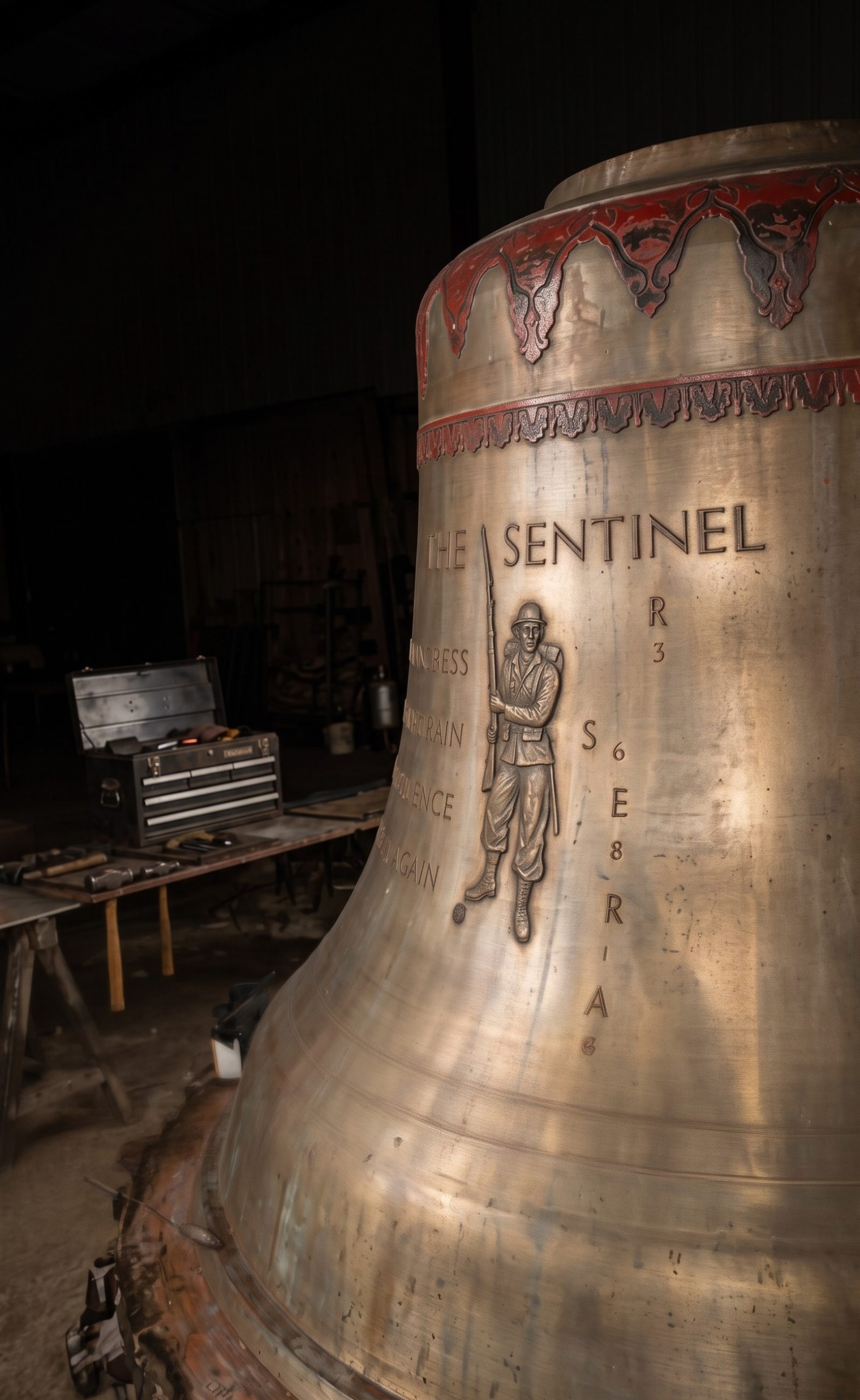
This precise forging method allowed the foundry to bake sharp, intricate details directly into the bronze. Because most of the bells were sponsored by locals to help fund the project, Paccard was able to integrate the donors' poetic, literary, and personal inscriptions onto the outer surfaces of the metal.
The lost-wax method also allowed for a highly detailed piece of artwork—a Civil War sentinel figure—to be cast directly onto the largest bell. Created from a plaster mold, this soldier figure honors the local Centralia Sentinel newspaper, which first began printing during the Civil War in May 1863, and serves to represent a loyal soldier standing guard.
Slideshow
Forging the Bells
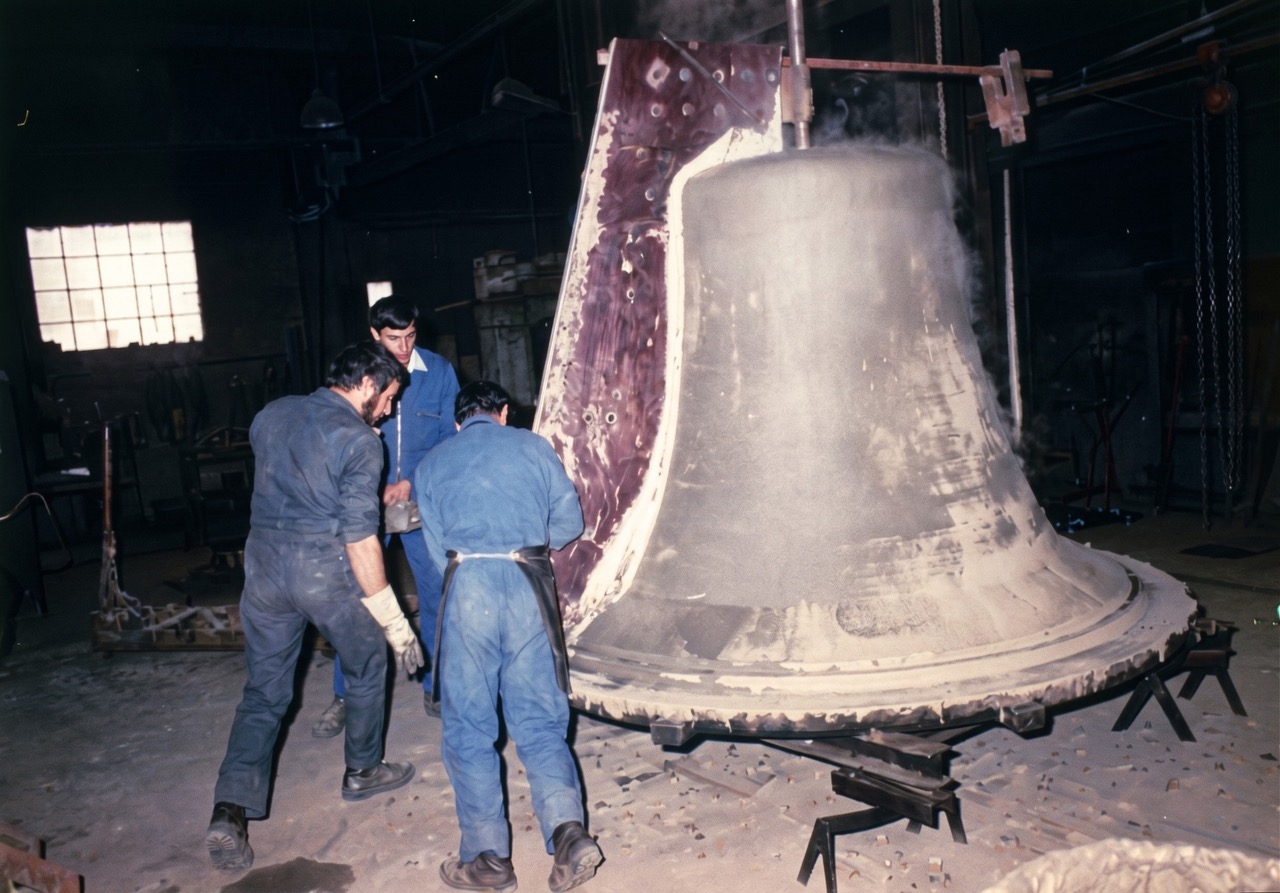
Workers piece together an iron case around the bell mold for “Great Tom,” the 11,000-pound bourdon and largest bell of the Centralia Carillon. This iron casing is necessary to secure the mold during the casting process. As each section is added, molding sand is stamped in to completely surround the bell, forming the outer mold known as the cope.
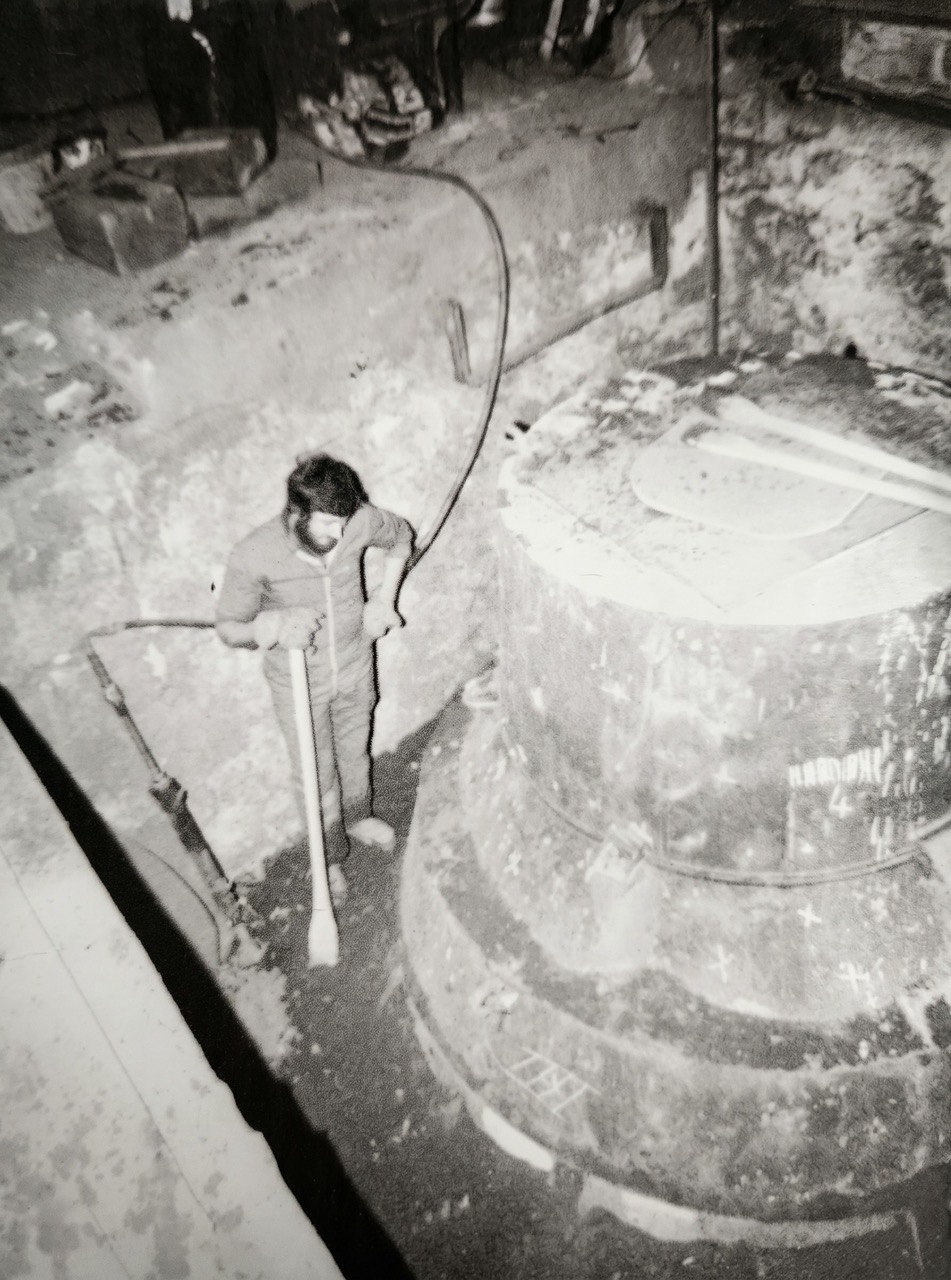
A worker stands next to a large bell mold inside an underground pit. Large bells are constructed in these lowered work areas to provide easier access to the furnace and the trough that guides the molten bronze. Placing the mold partially underground also slows down the cooling-off period, which takes up to three weeks for a massive bell like Great Tom.
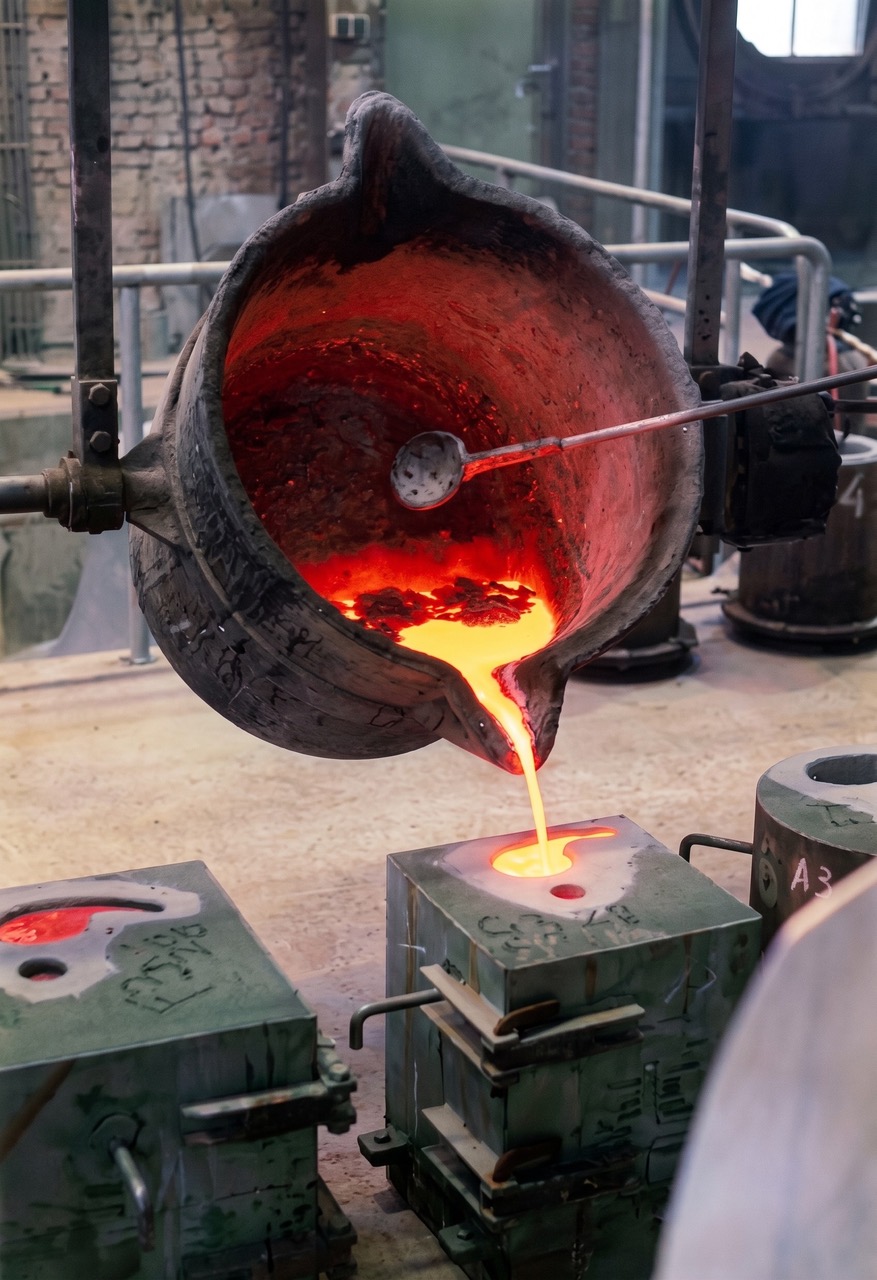
Molten bronze glows brightly as it is poured from a tilting crucible furnace to cast the smaller bells of the carillon. To ensure these smaller bells produce a clear, brilliant tone, the tin content in the bronze is raised from the standard 20% to almost 25%.
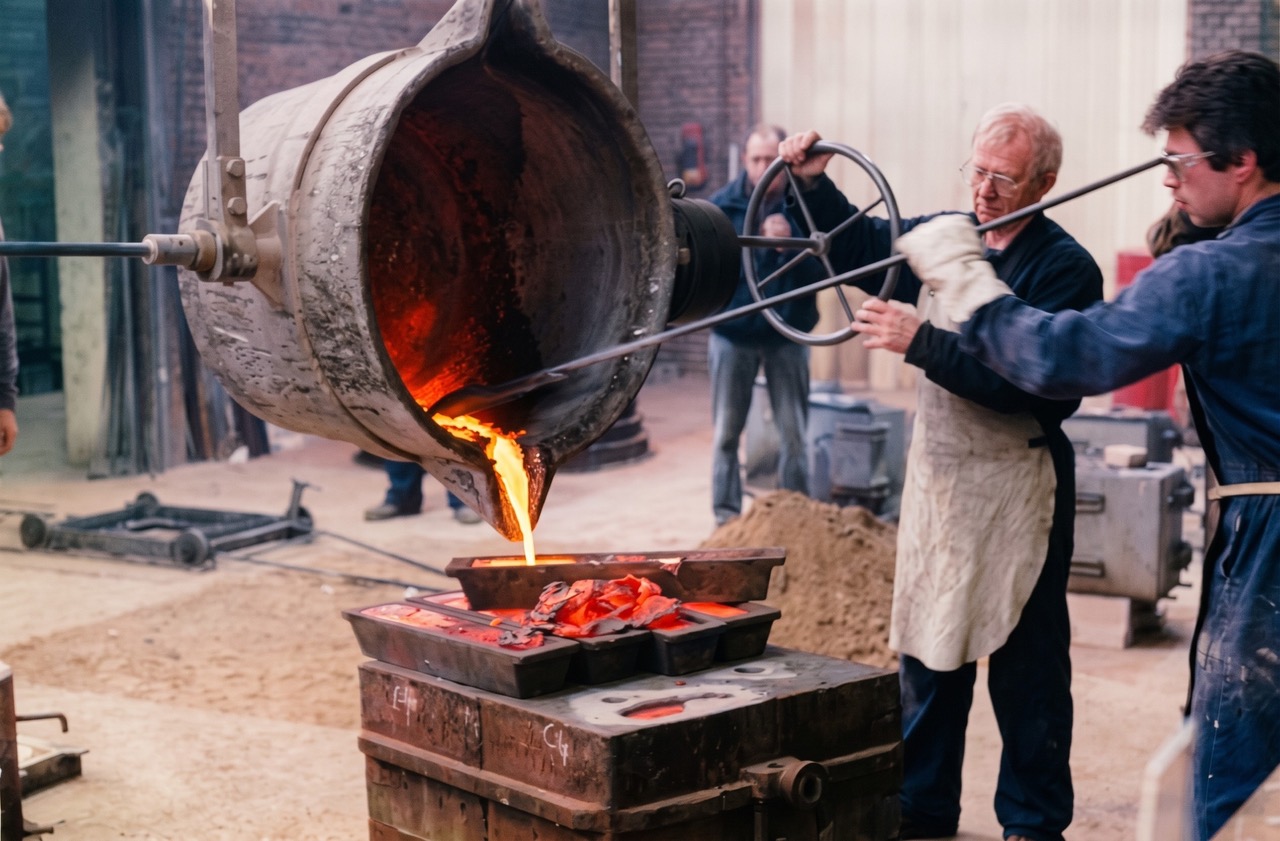
Workers manually control the pour of molten bronze from the tilting crucible furnace into the smaller molds. During casting, the bronze alloy is heated to 2,000 degrees Fahrenheit before flowing into the precise cavity left behind after the false clay bell and wax are removed from the mold.
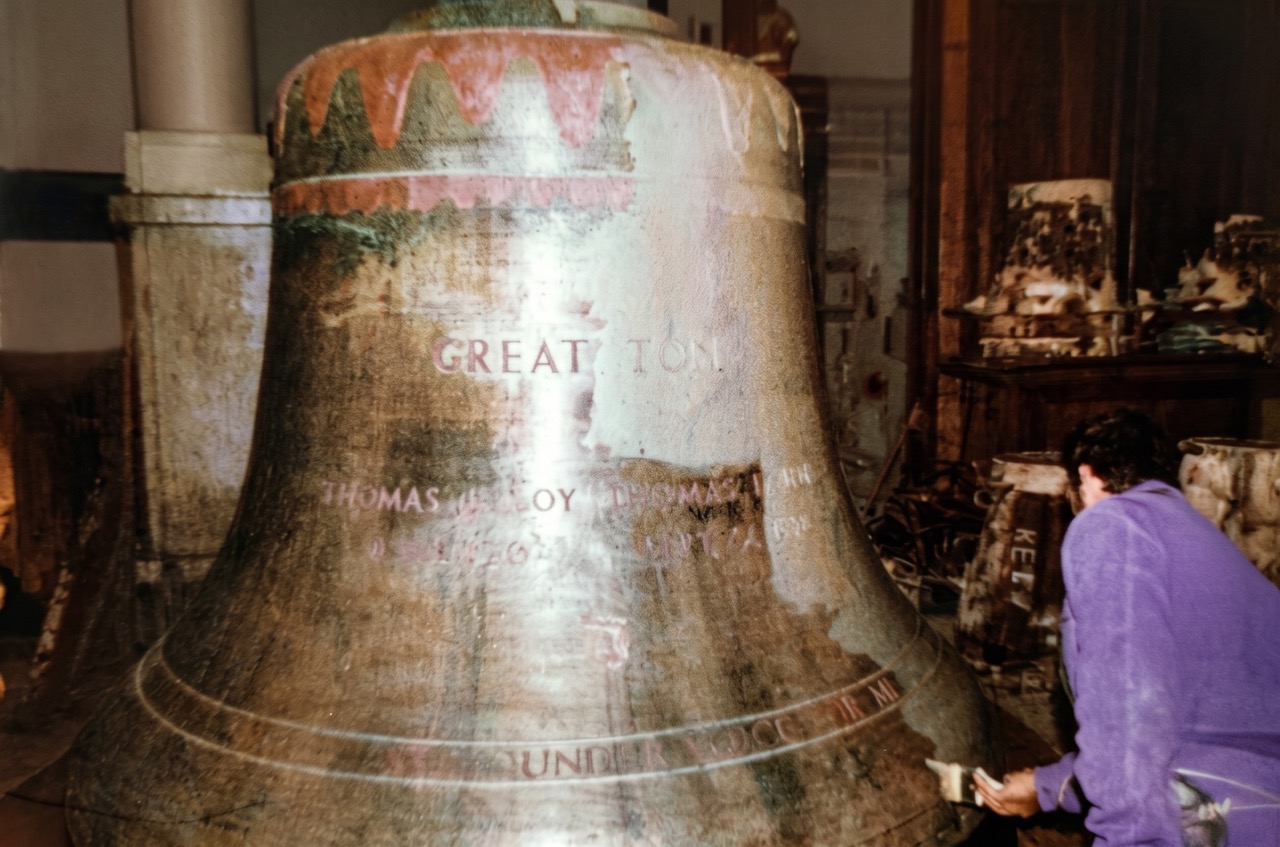
A worker cleans and finishes the freshly cast “Great Tom,” the 11,000-pound bourdon. This cleaning and burnishing process gives the completed bell a smooth, bright finish while highlighting the detailed inscriptions and border accents that were originally crafted from molding wax. Following this step, the bell will be carefully tuned by boring thin layers of metal from the inside until the exact pitch is achieved.