History
Centralia, Illinois · 1982
A Carillon for Centralia
The story of the tower and its sixty-five bells, told in eight parts: from a Centralia native’s first encounter with bell music to the three-acre park that surrounds the tower today.
The Centralia Foundation · A history of the tower, the bells, and the people who paid for them
Some historical photographs on this page have been restored using AI. Restored images may not match the original photographs in every detail.
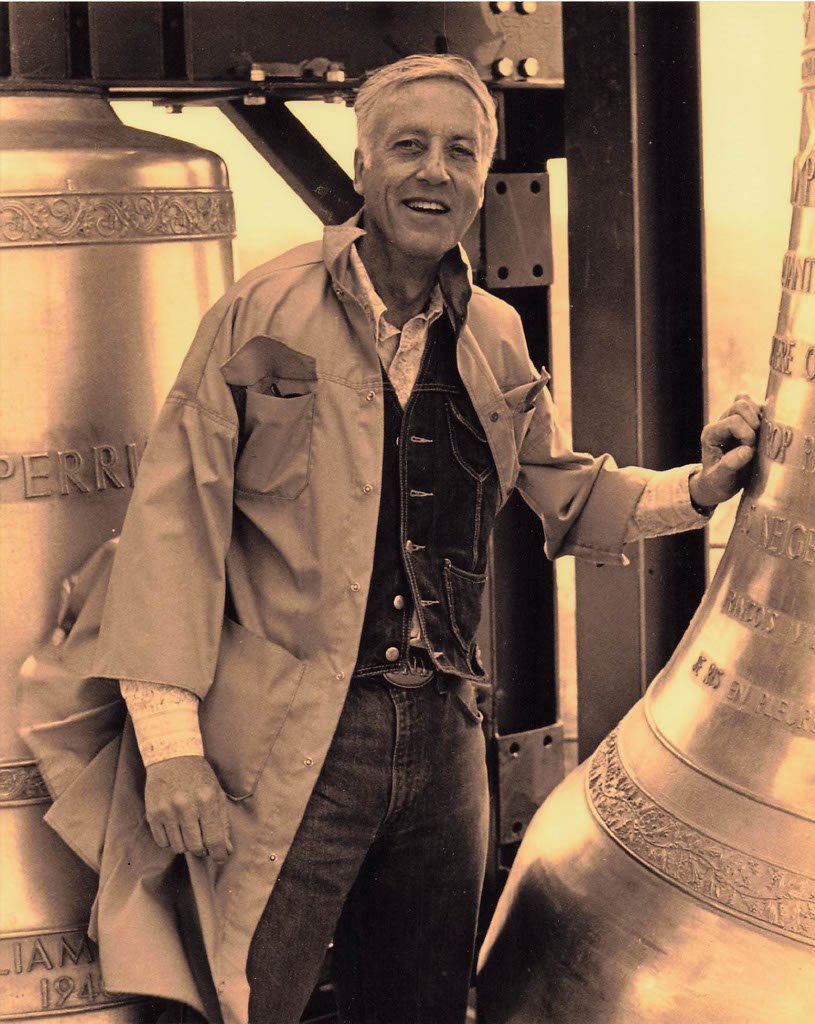
William Joy, whose lifelong dream became the Centralia Carillon, beside Great Tom — the 11,000-pound bourdon.
The Centralia Carillon began as the lifelong dream of Centralia native William Joy. While attending Cornell University, Joy first discovered the beauty of bell music, and his fascination deepened as he traveled through Northern Europe. Captivated by these historic instruments, he envisioned building a carillon in his hometown to serve as a lasting monument for the community. Read more
To bring the project to life, Joy launched a community fundraising effort. Most of the bells were sponsored by local residents as permanent memorials, featuring personal inscriptions cast alongside the donors’ names. Project leaders also enlisted regional experts, bringing together St. Louis architects Becker & Flowers and Centralia contractor Depew & Owen to execute the structural design. Read more
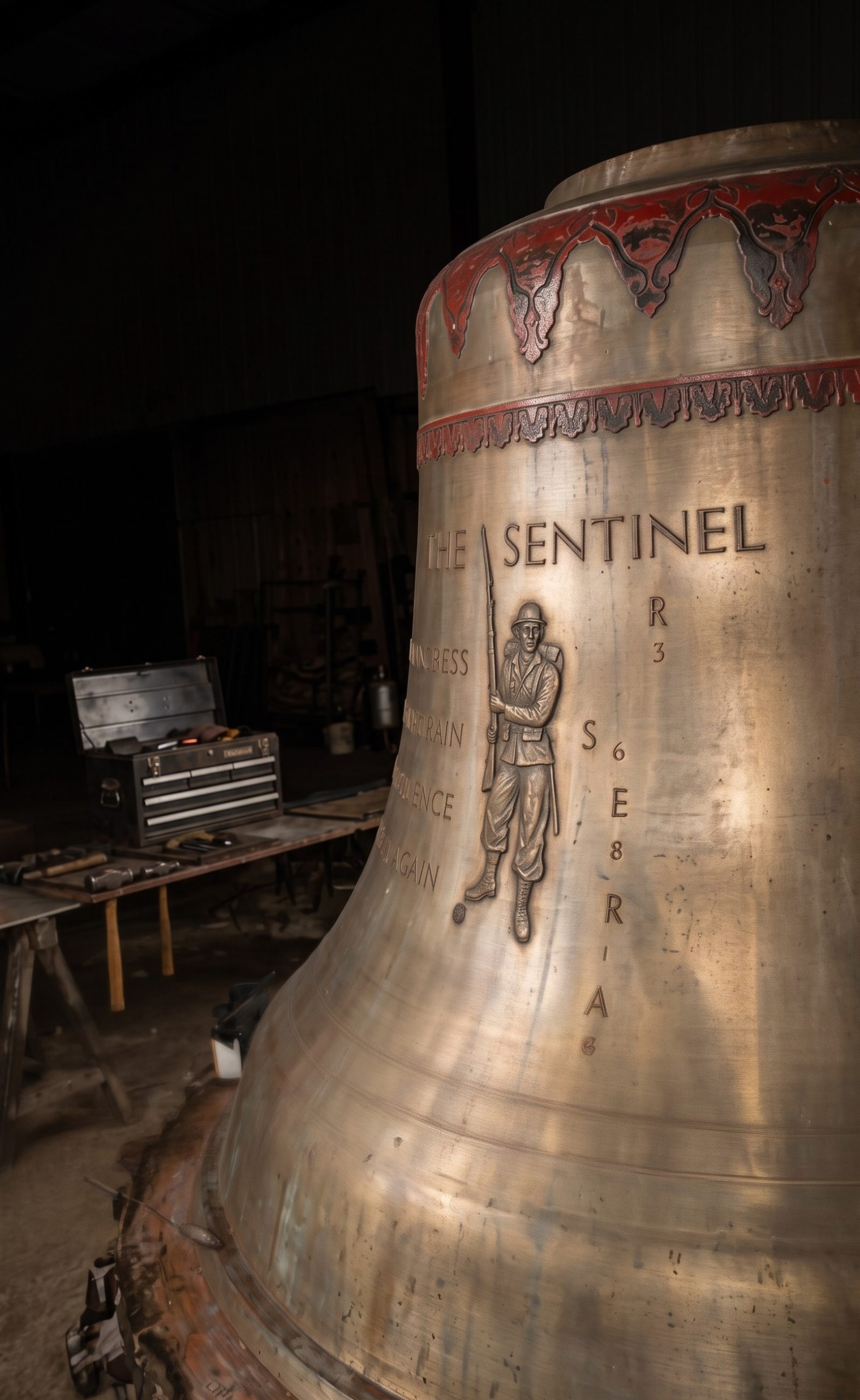
The Sentinel Bell, cast by the Paccard foundry with a Civil War sentinel in its bronze.
The committee commissioned the well known Paccard Fonderie des Cloches in Annecy, France, to cast the 65-bell instrument. Using the ancient “lost-wax” casting method, the foundry achieved clear acoustics while baking intricate artwork, including a Civil War sentinel, directly into the bronze. Read more
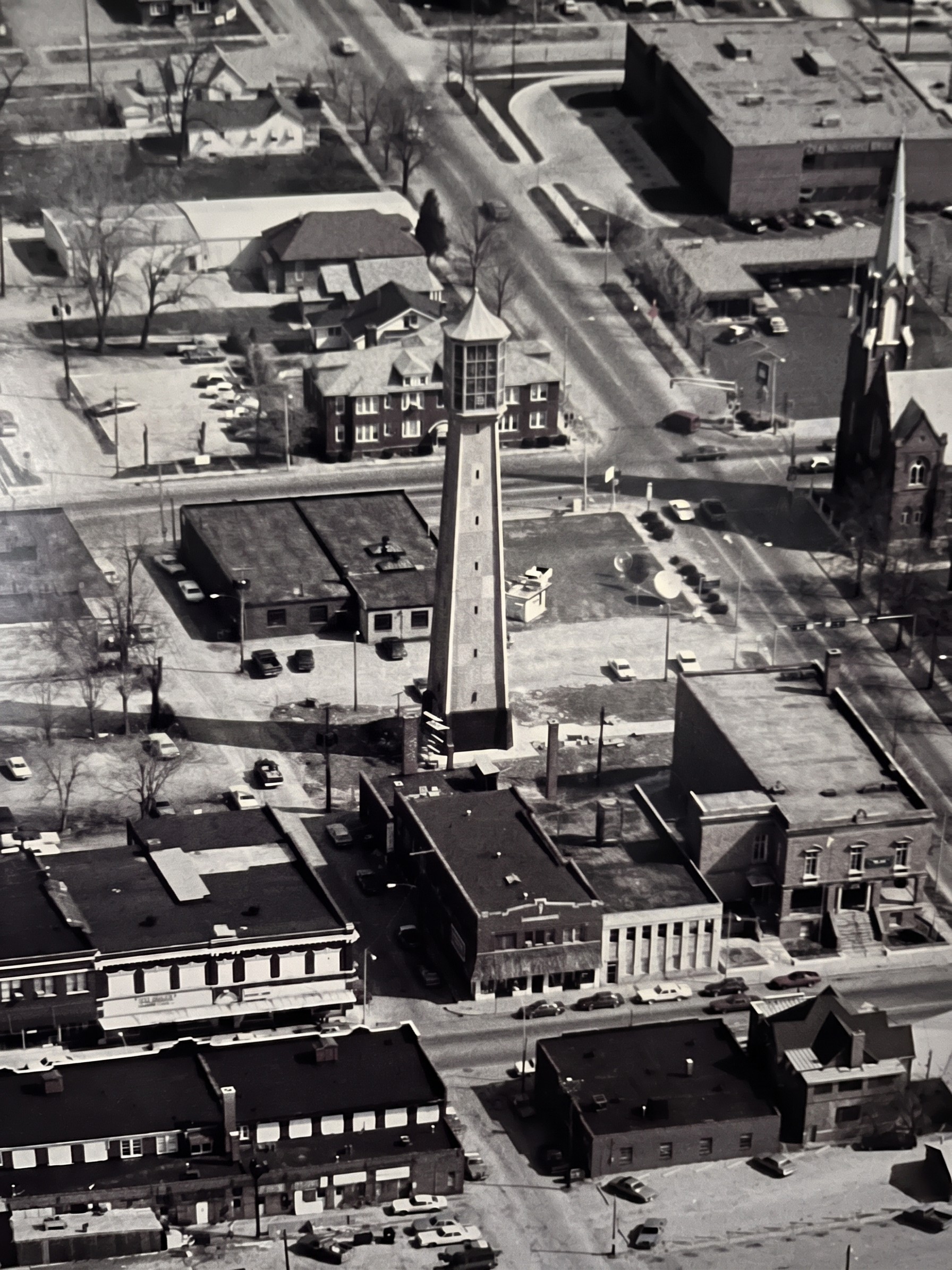
The downtown site on Elm Street at the time the tower was built.
Organizers secured a downtown parcel along Elm Street to ensure the tower became a central hub for the city. This prime location allowed the instrument’s music to be heard widely and would bring a welcoming park to the heart of Centralia. Read more
Slideshow
Forging the Bells
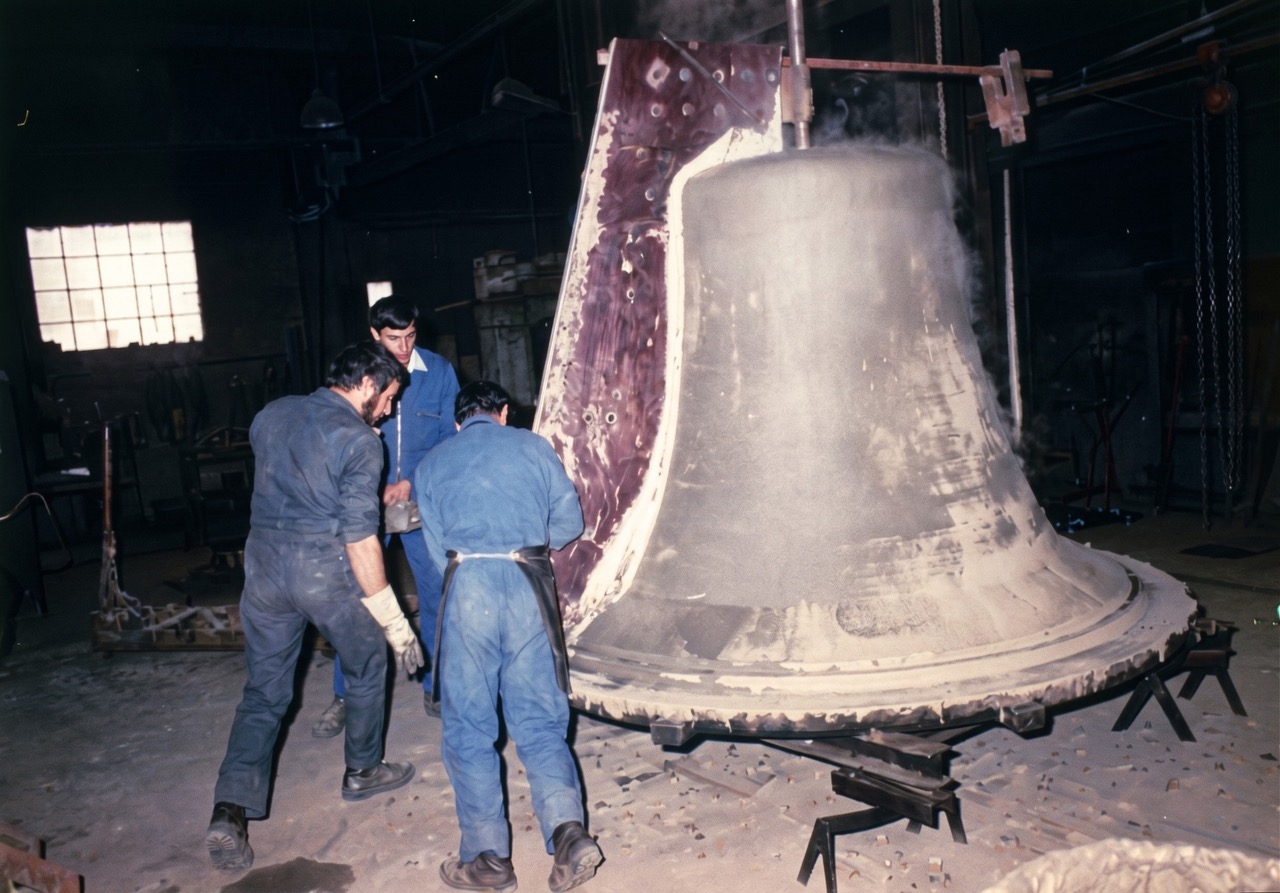
Workers piece together an iron case around the bell mold for “Great Tom,” the 11,000-pound bourdon and largest bell of the Centralia Carillon. This iron casing is necessary to secure the mold during the casting process. As each section is added, molding sand is stamped in to completely surround the bell, forming the outer mold known as the cope.
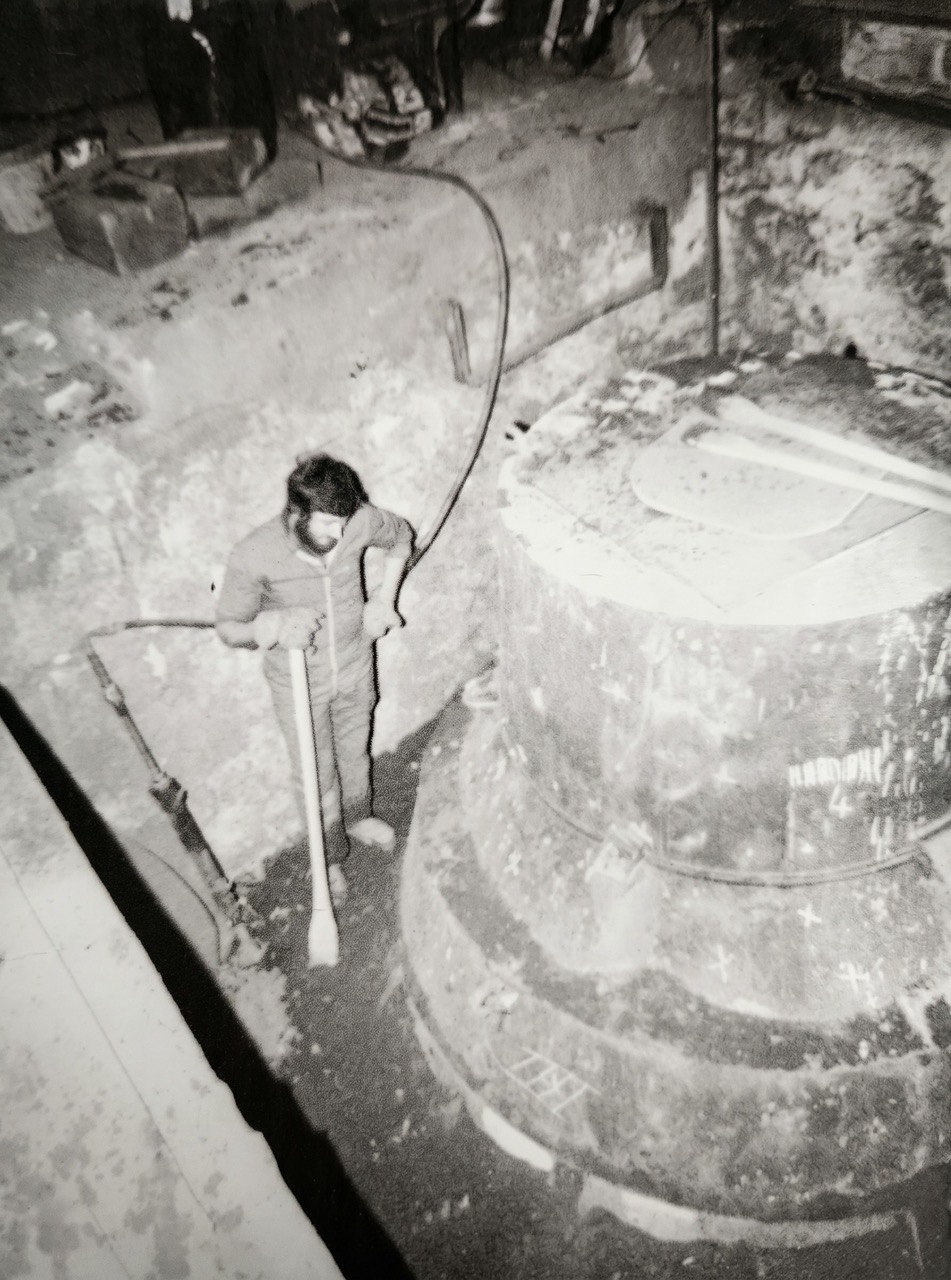
A worker stands next to a large bell mold inside an underground pit. Large bells are constructed in these lowered work areas to provide easier access to the furnace and the trough that guides the molten bronze. Placing the mold partially underground also slows down the cooling-off period, which takes up to three weeks for a massive bell like Great Tom.
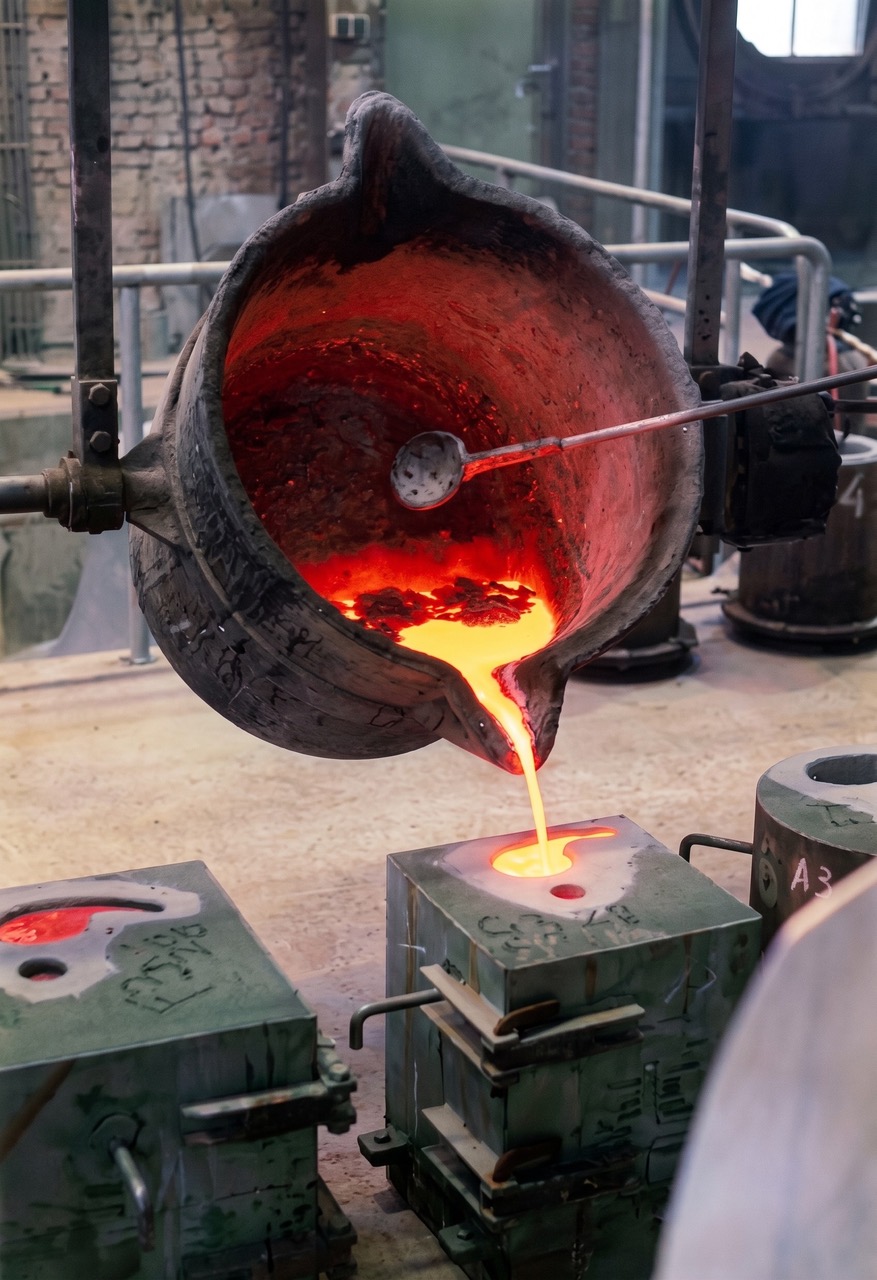
Molten bronze glows brightly as it is poured from a tilting crucible furnace to cast the smaller bells of the carillon. To ensure these smaller bells produce a clear, brilliant tone, the tin content in the bronze is raised from the standard 20% to almost 25%.
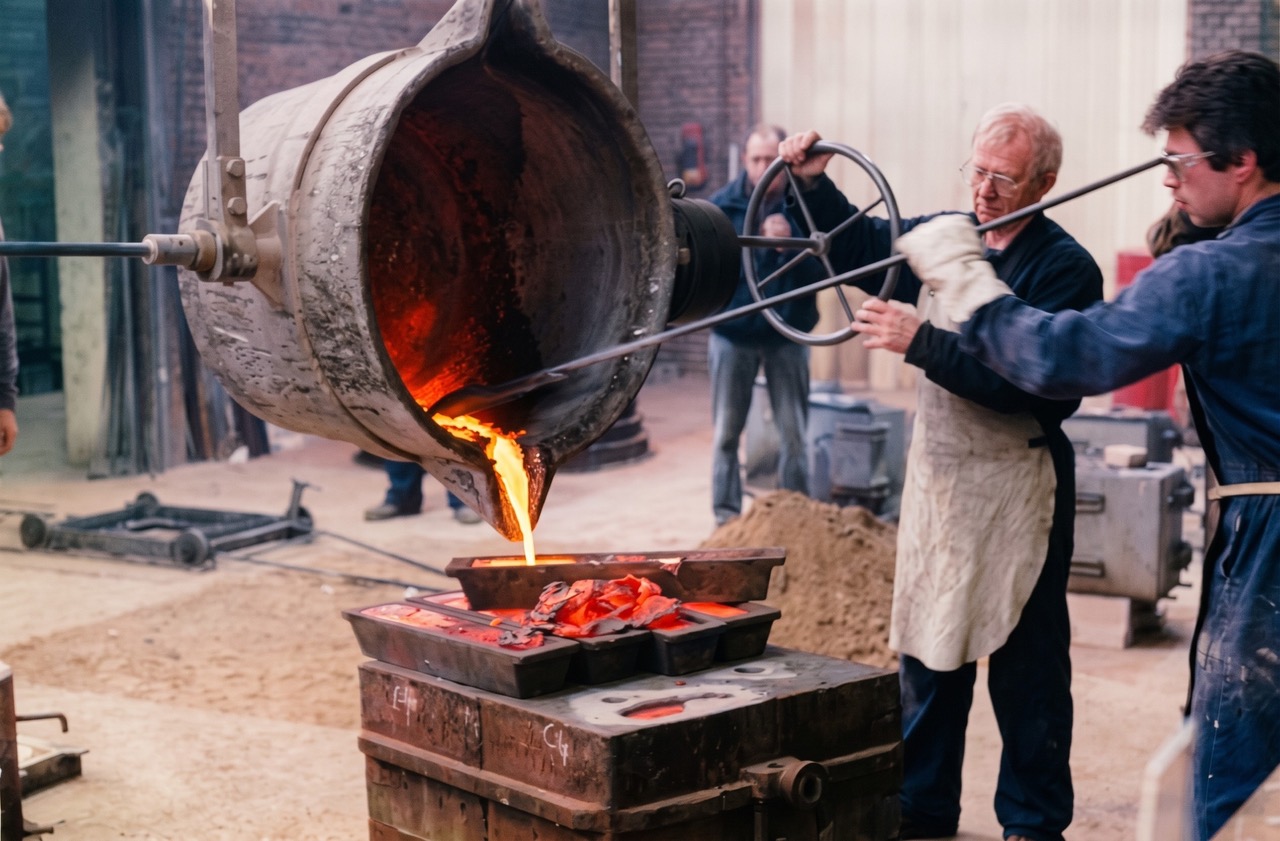
Workers manually control the pour of molten bronze from the tilting crucible furnace into the smaller molds. During casting, the bronze alloy is heated to 2,000 degrees Fahrenheit before flowing into the precise cavity left behind after the false clay bell and wax are removed from the mold.
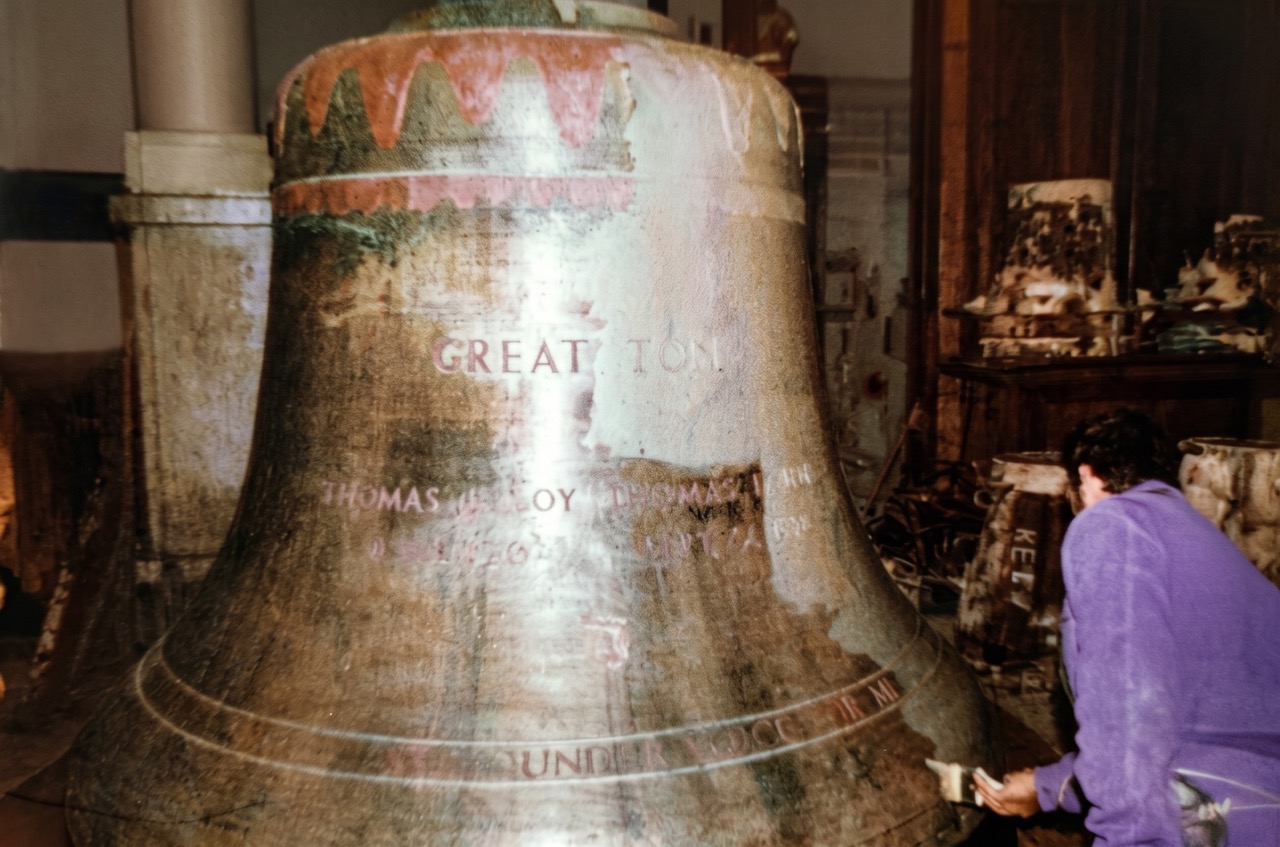
A worker cleans and finishes the freshly cast “Great Tom,” the 11,000-pound bourdon. This cleaning and burnishing process gives the completed bell a smooth, bright finish while highlighting the detailed inscriptions and border accents that were originally crafted from molding wax. Following this step, the bell will be carefully tuned by boring thin layers of metal from the inside until the exact pitch is achieved.
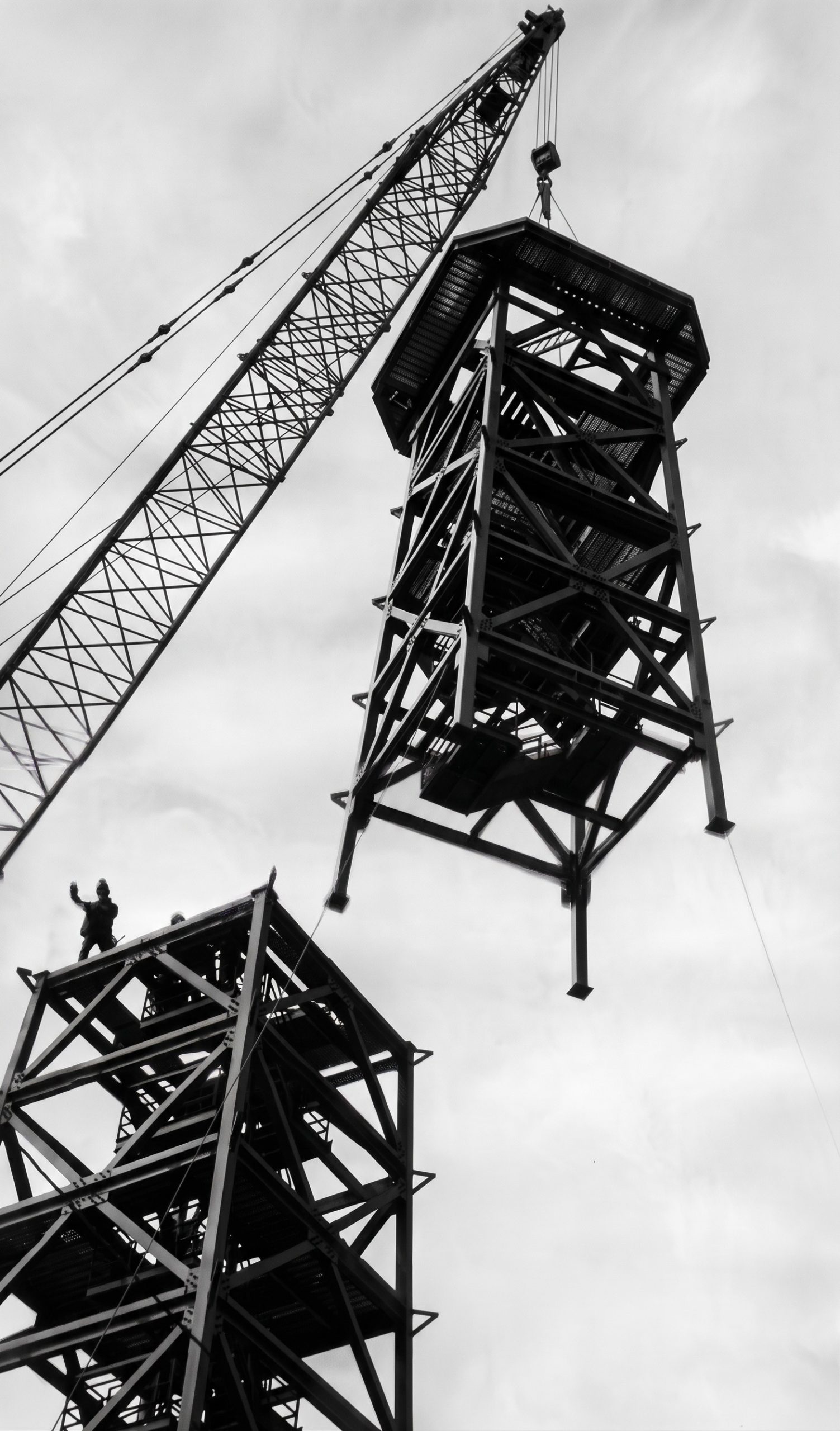
The prefabricated steel frame was assembled on the ground in three sections and hoisted into place one at a time.
Site work commenced in late 1982, and a large crane was brought in to hoist the 160-foot prefabricated steel frame. The finished tower features an Austrian greenish-black granite base, a stainless-steel acoustic “birdcage” sound screen, and 173 interior stairs climbing to the playing cabin. Read more
Slideshow
Tower Construction
Design and Excavation
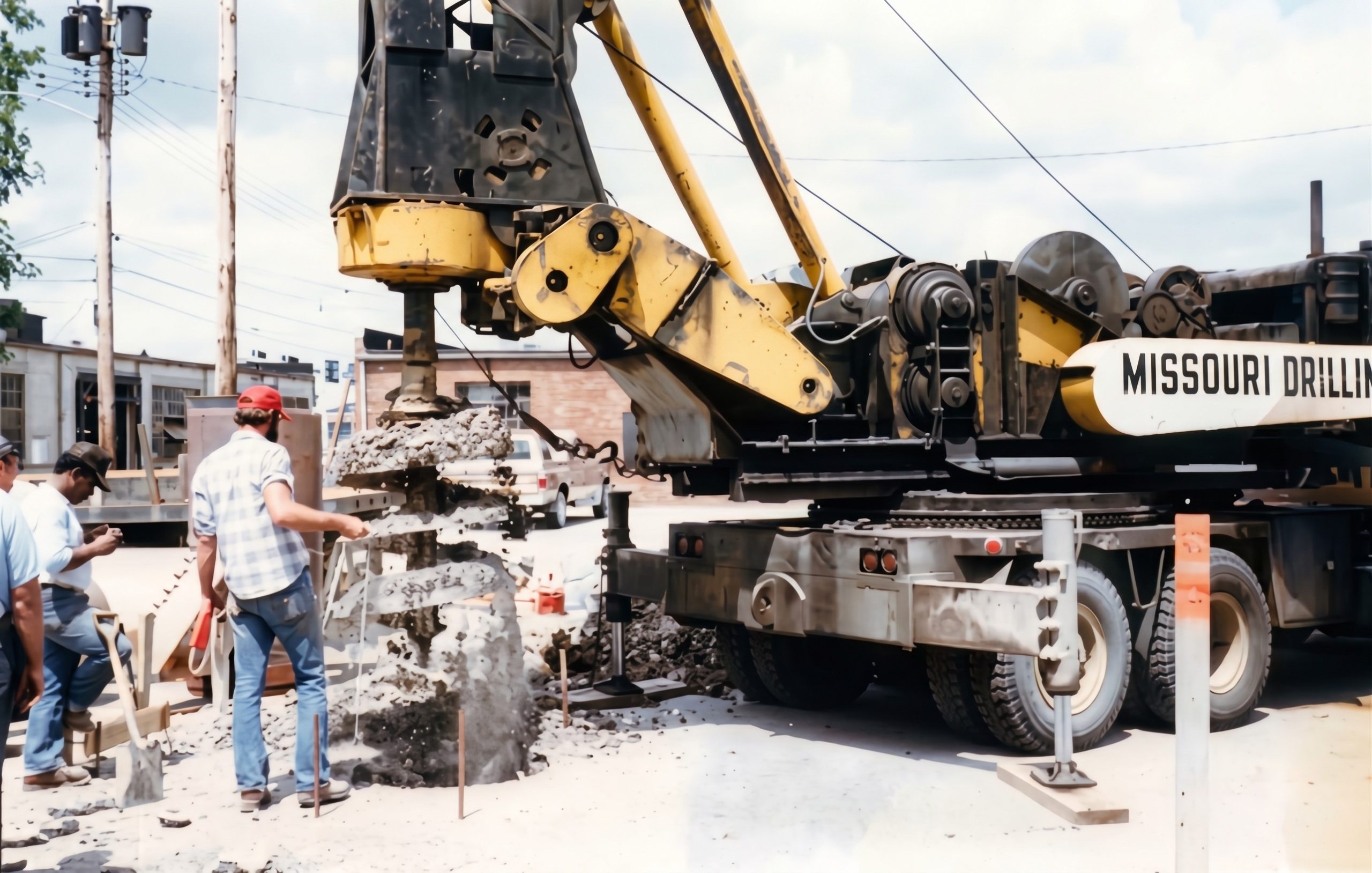
A specialized drill bores deep holes for the foundation supports, late 1982.
Steel Framework Assembly
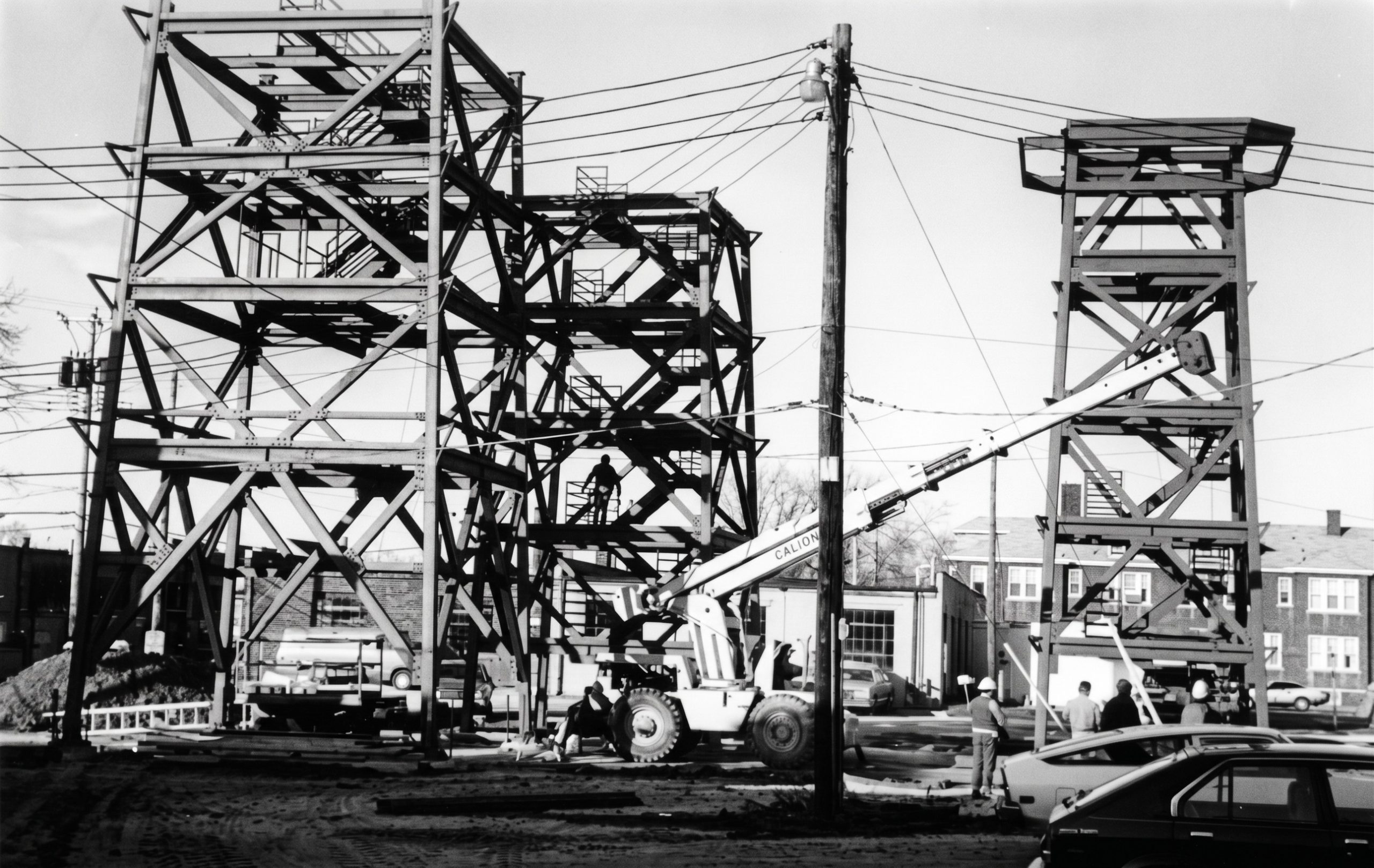
“Big Bertha” assembled on the ground in three sections: base, middle and top.
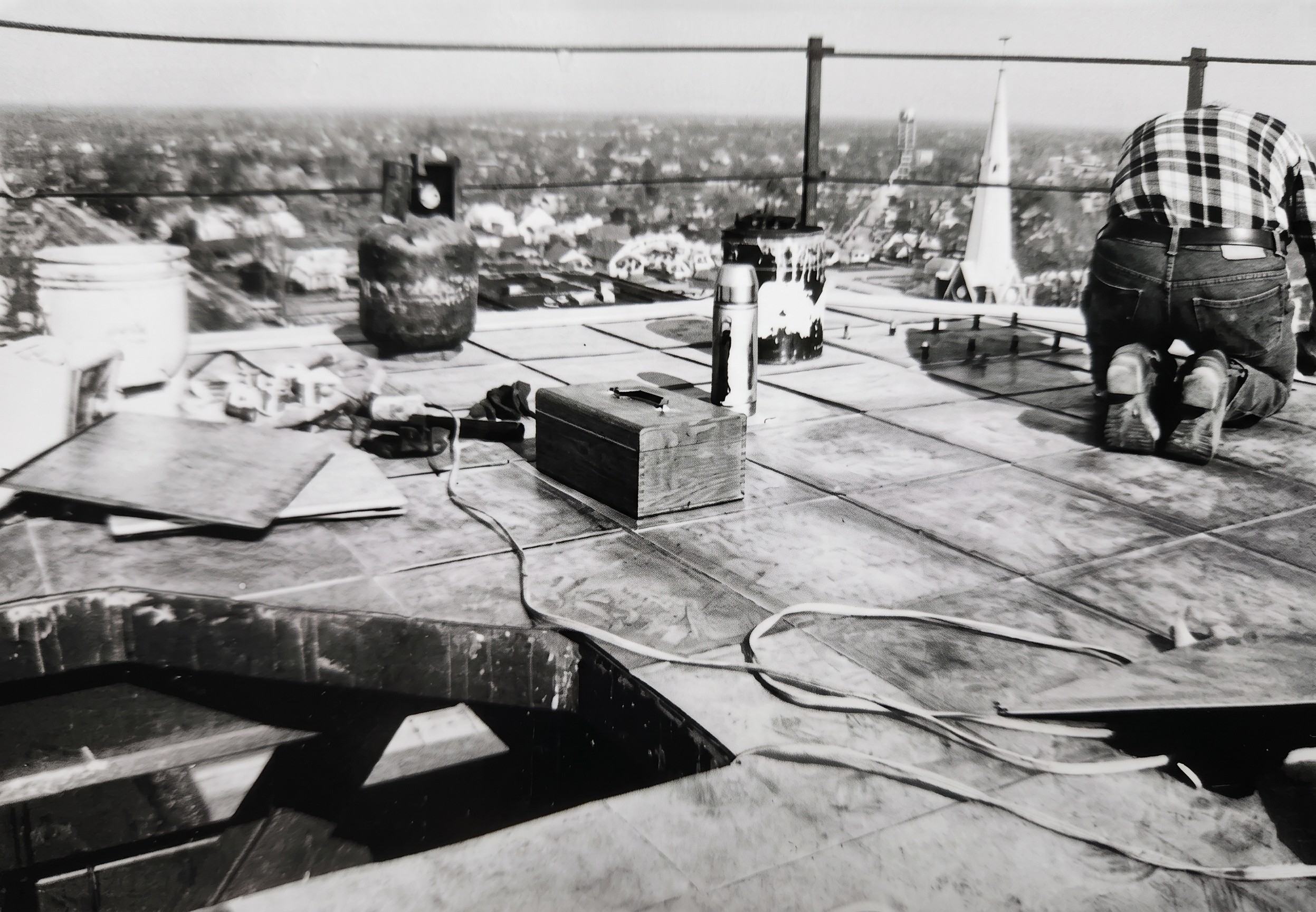
Hoisting the structure
Finishing work atop the 160-foot tower.
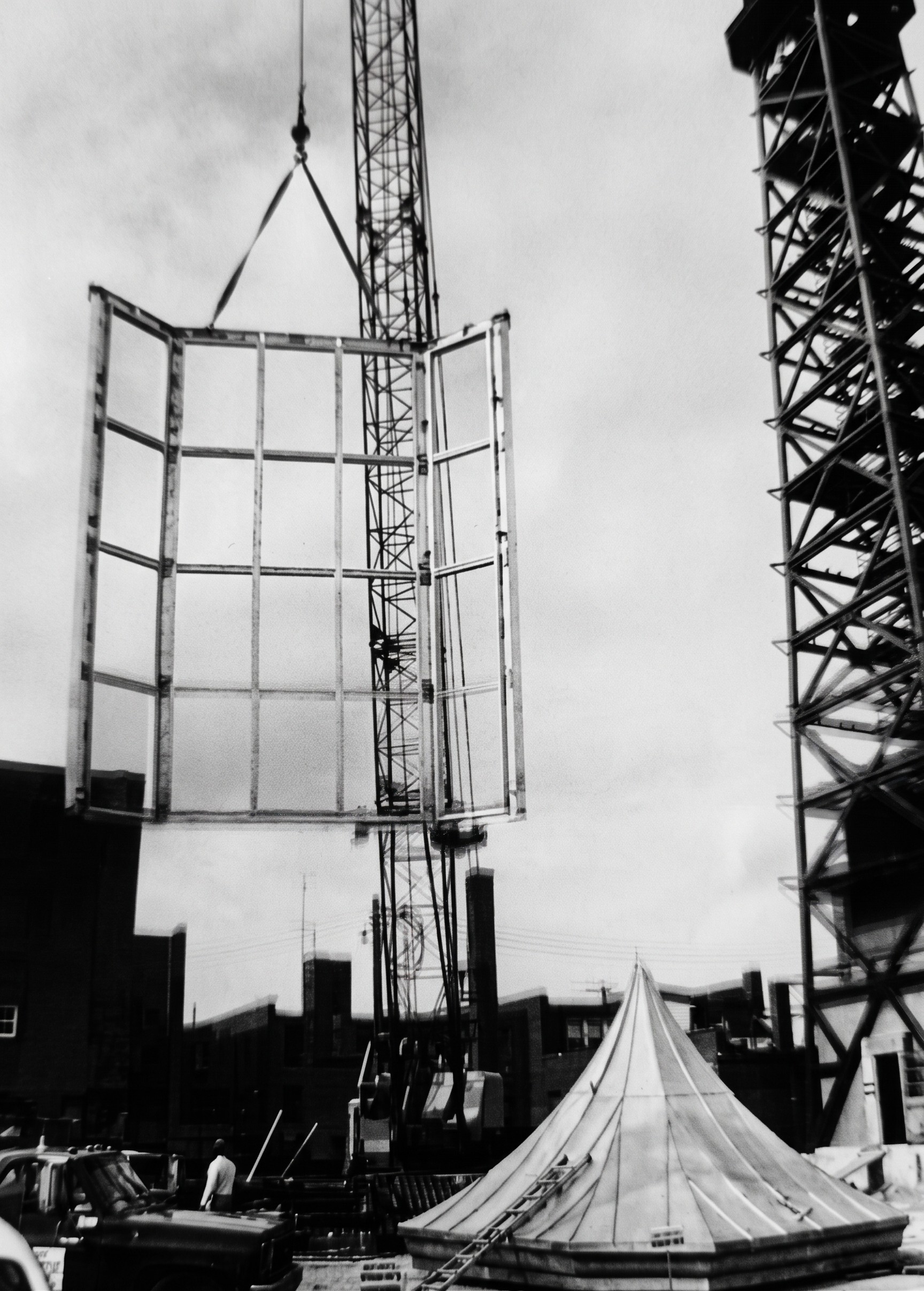
The Belfry
The belfry enclosure goes up
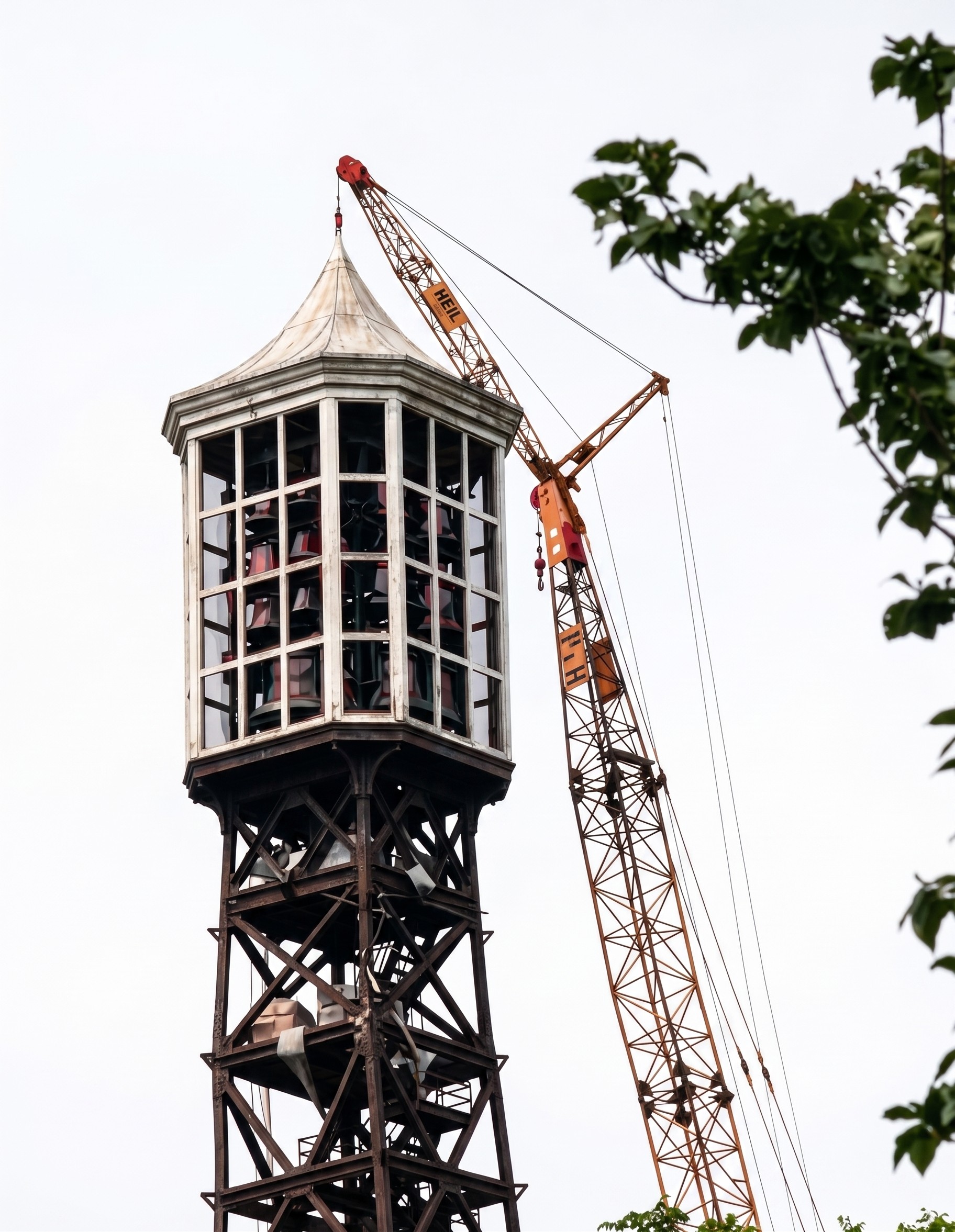
The Roof
The completed belfry and roof.
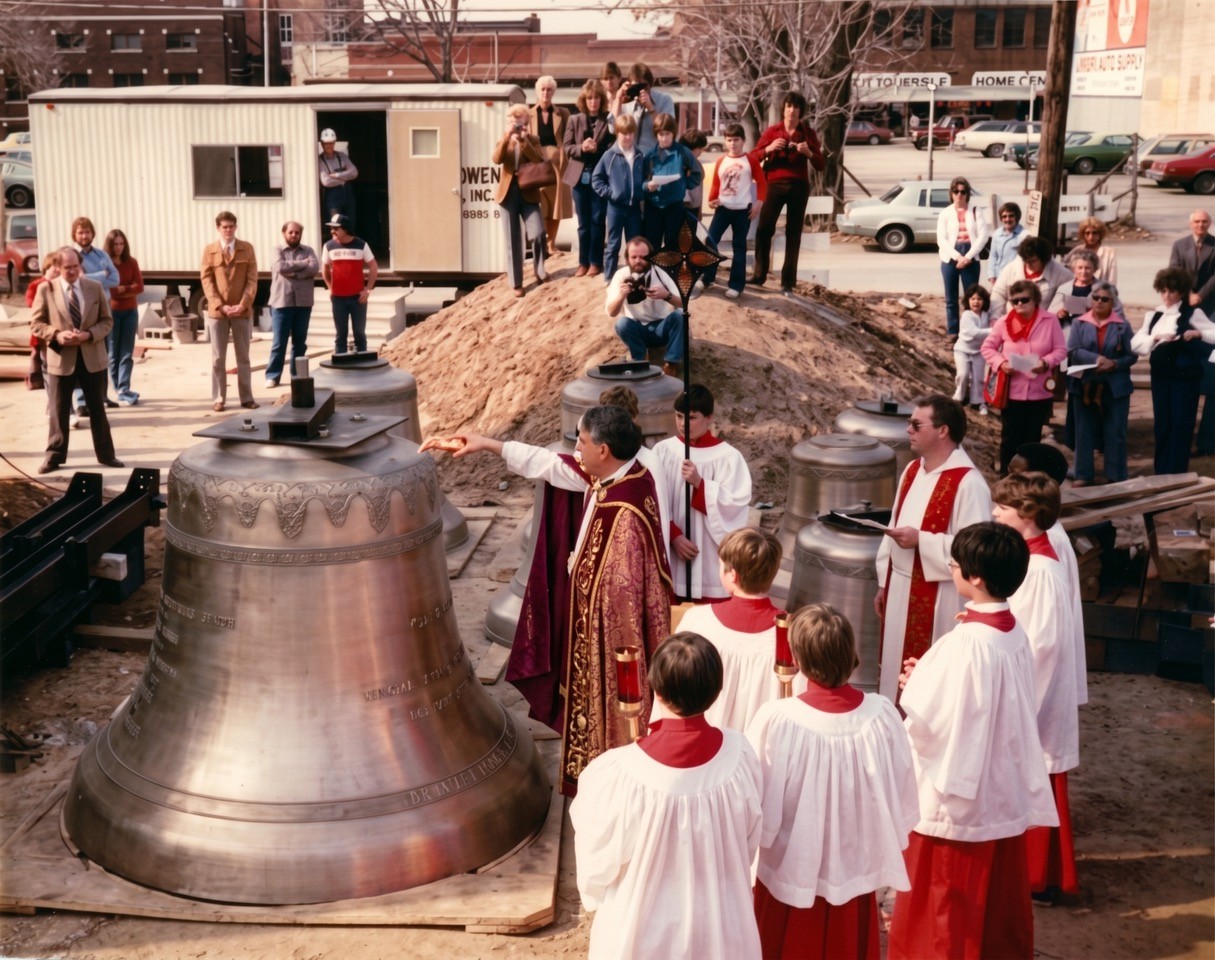
The blessing of the bells at the christening ceremony before installation.
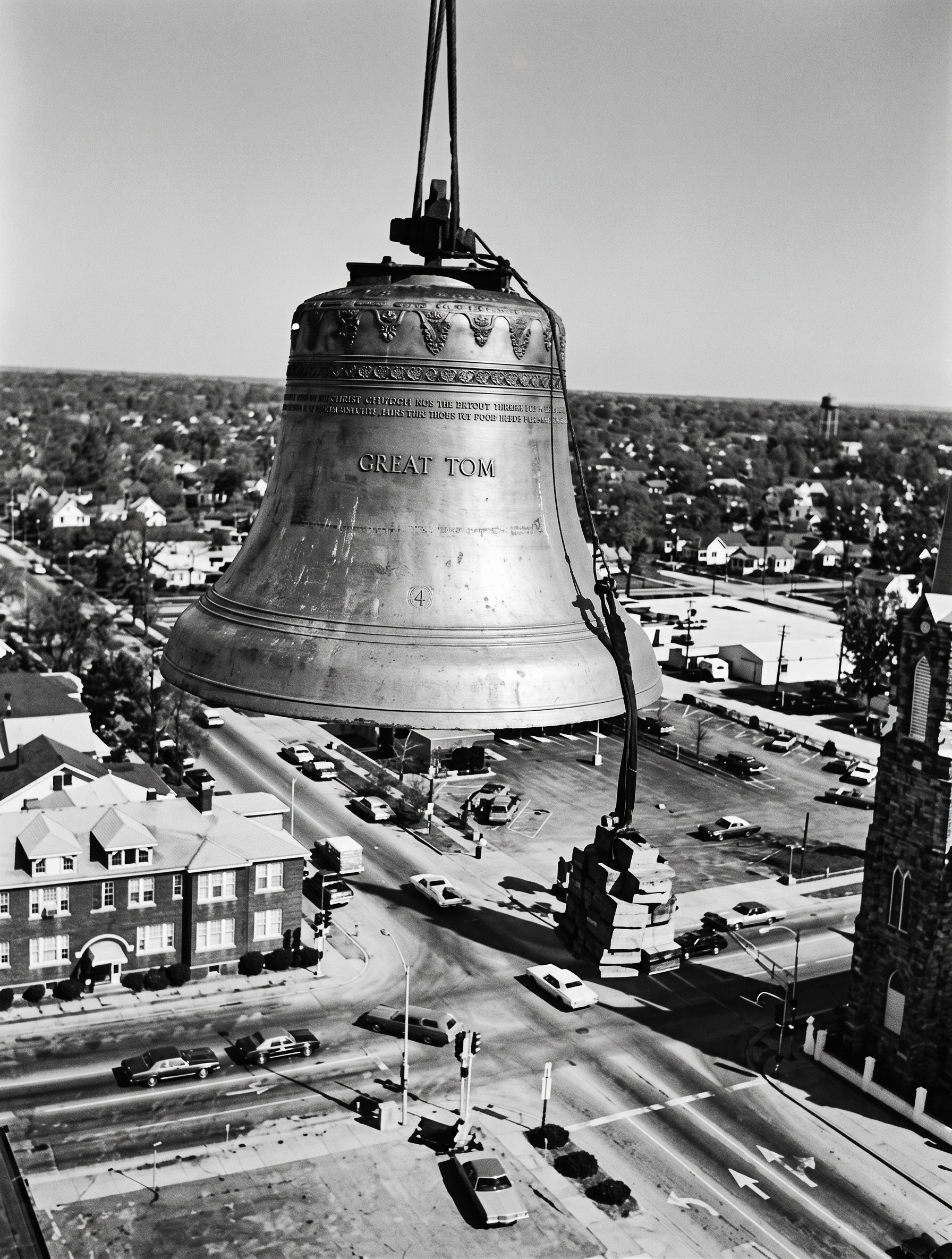
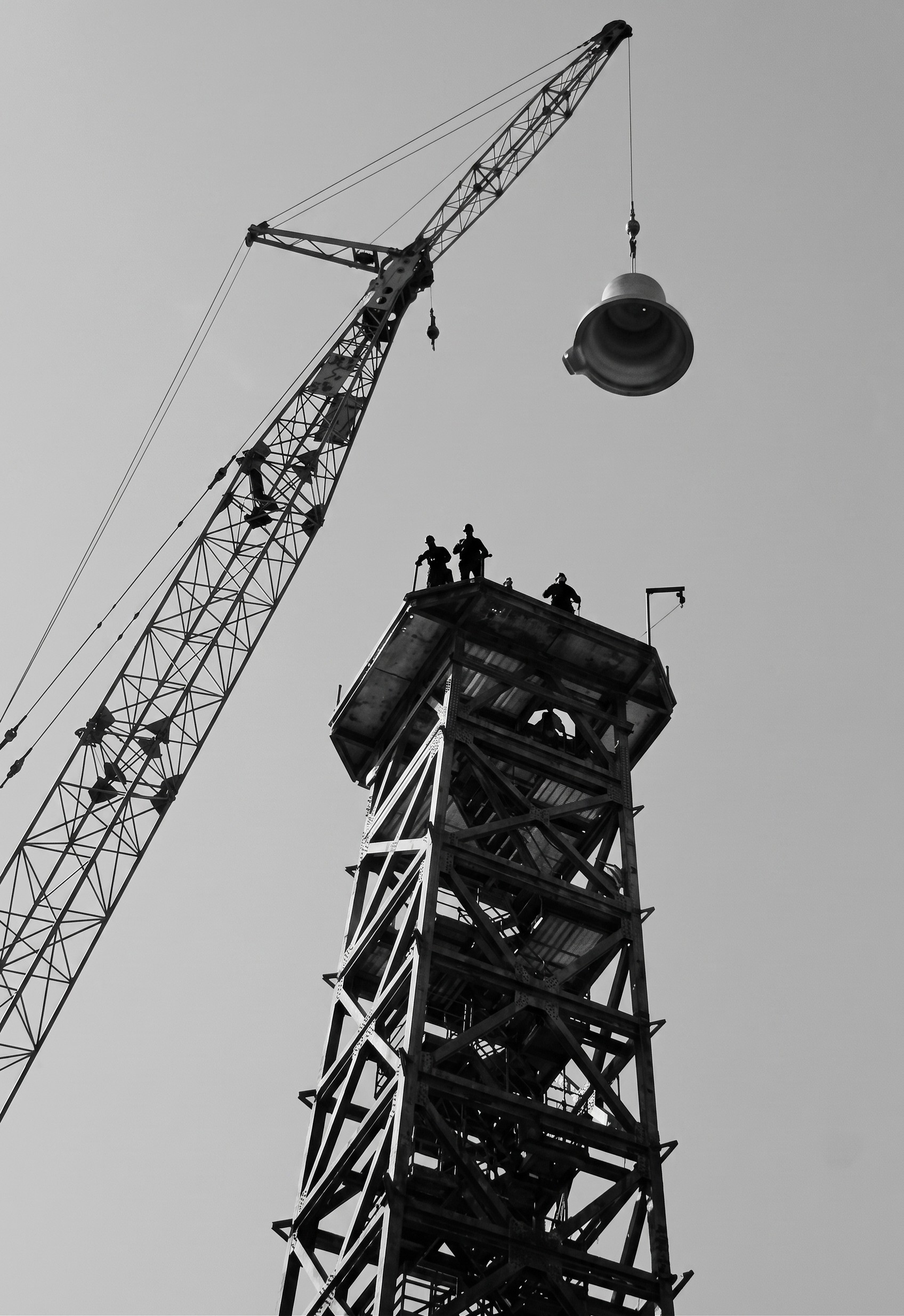
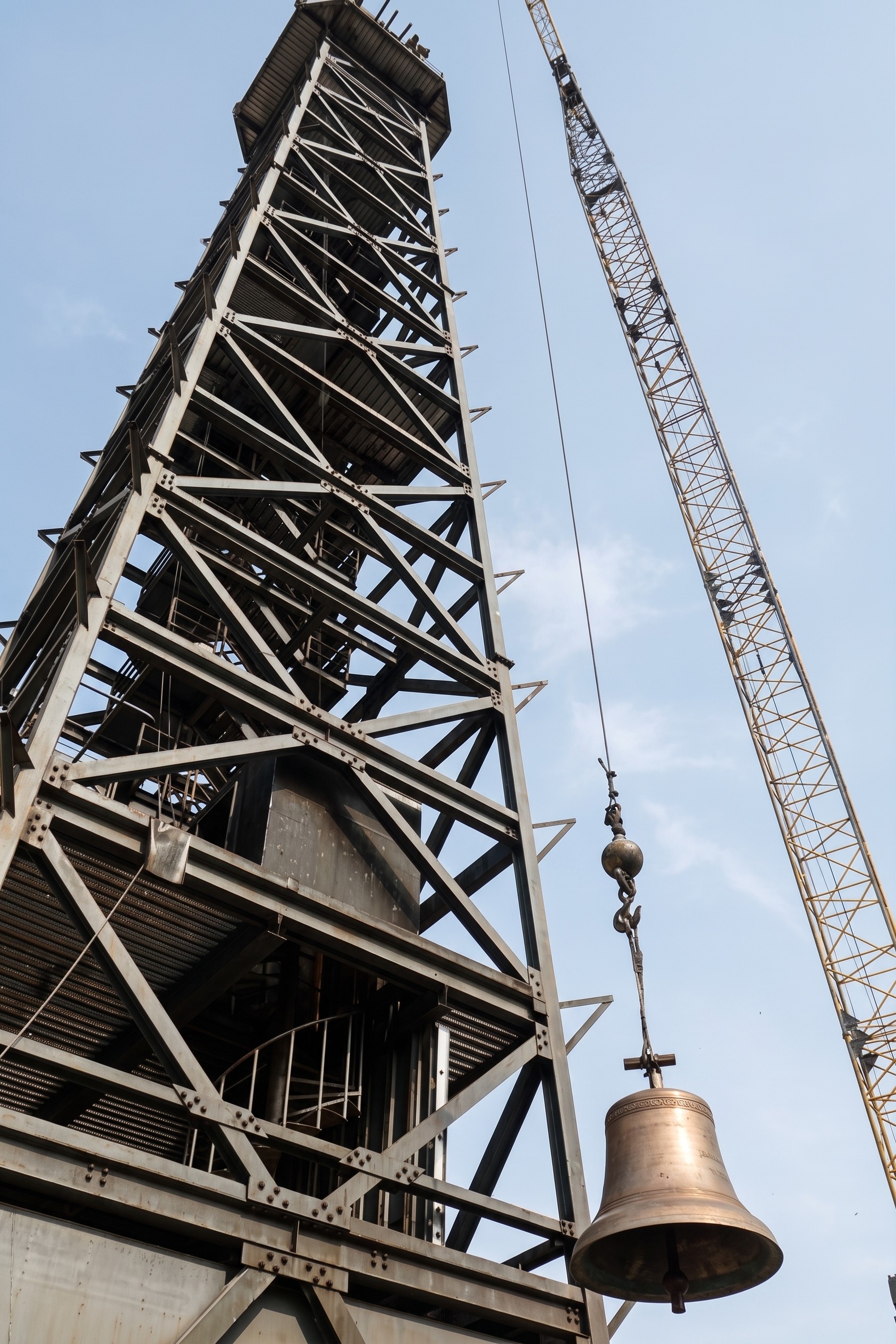
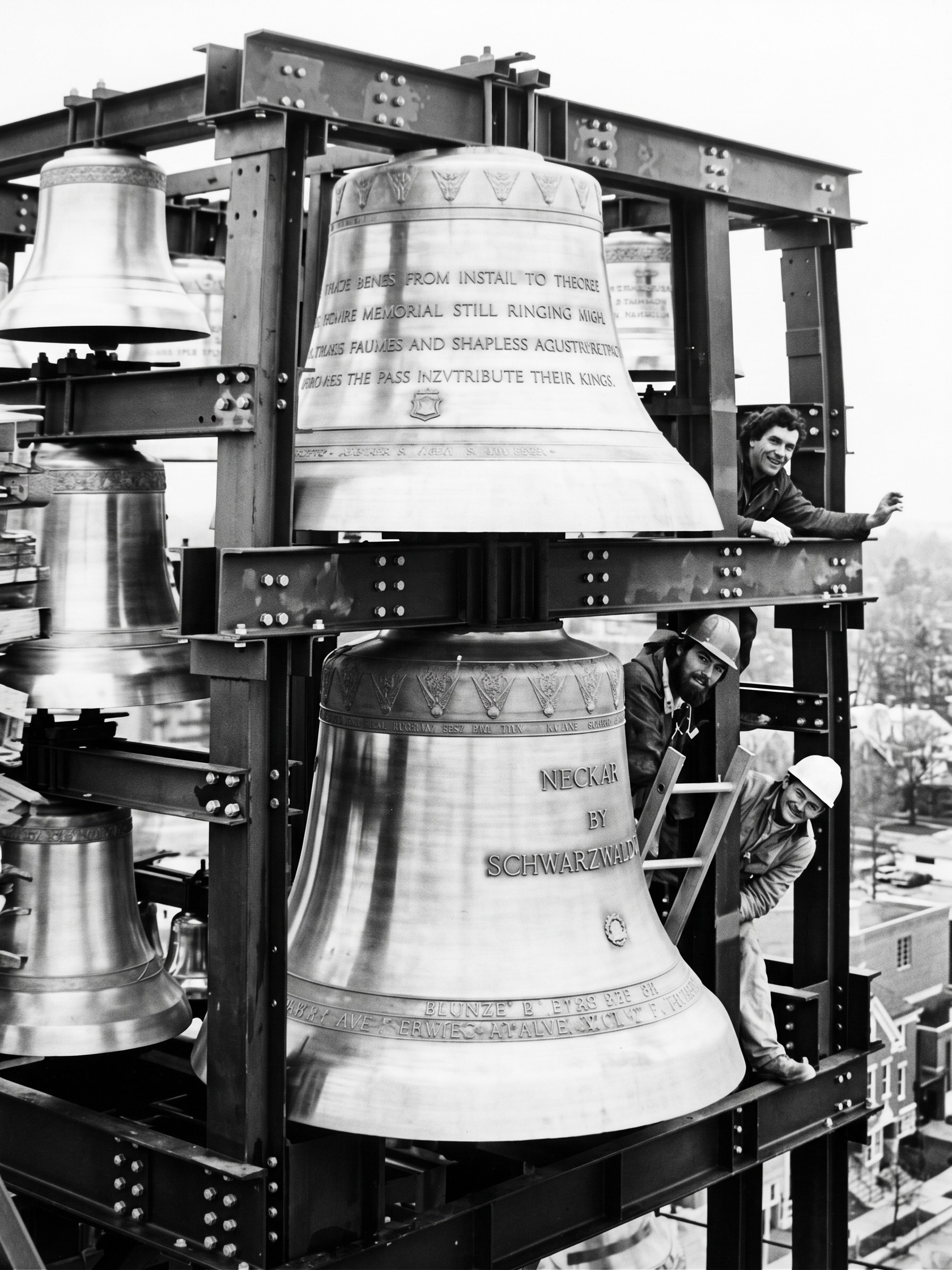
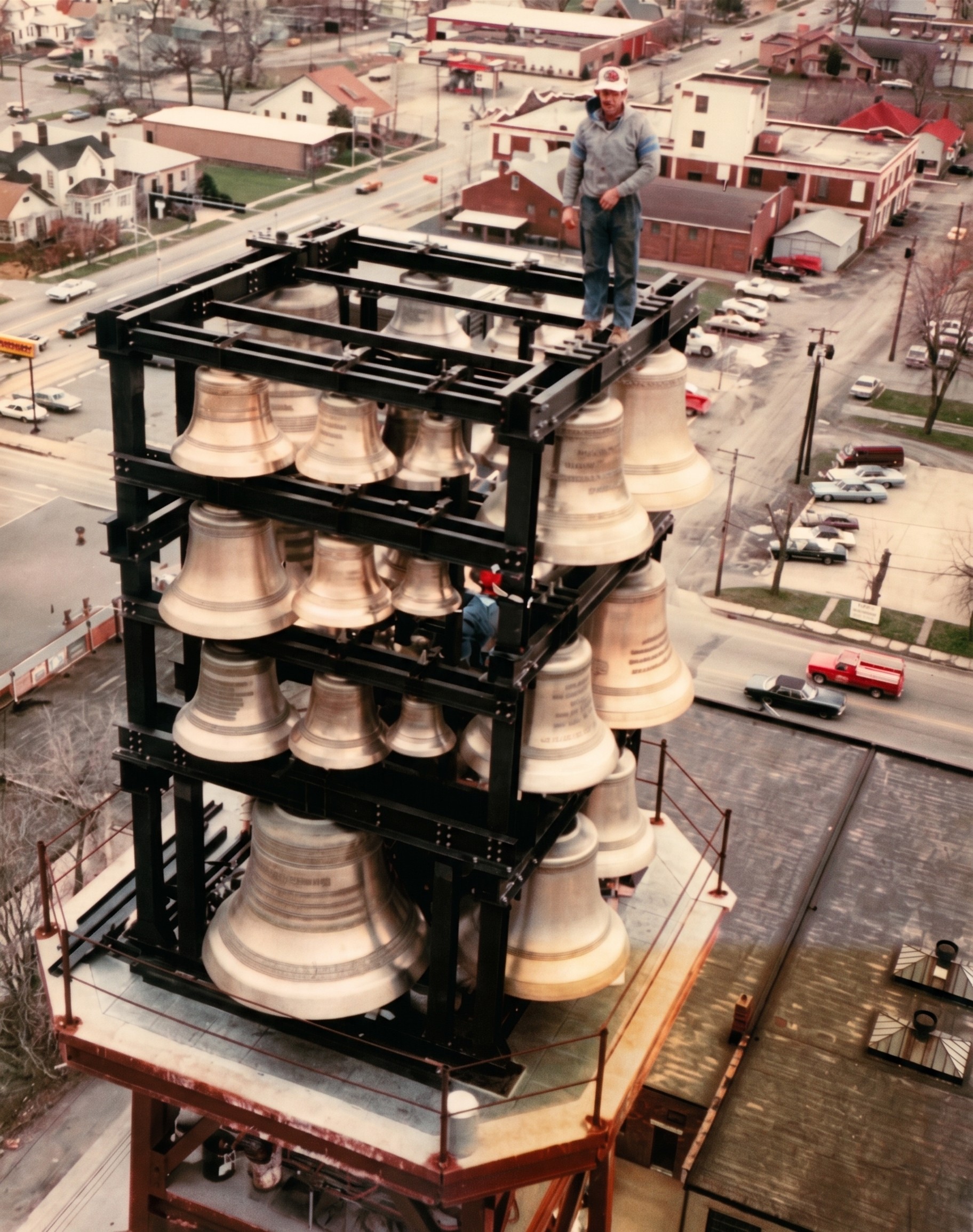
The 65 bronze bells, weighing a combined 61,312 pounds, arrived in mid-February 1983. Following a formal christening ceremony, crews hoisted each bell into the belfry, beginning with the 11,000-pound bourdon, “Great Tom,” and successfully installed the playing console by mid-March. Read more
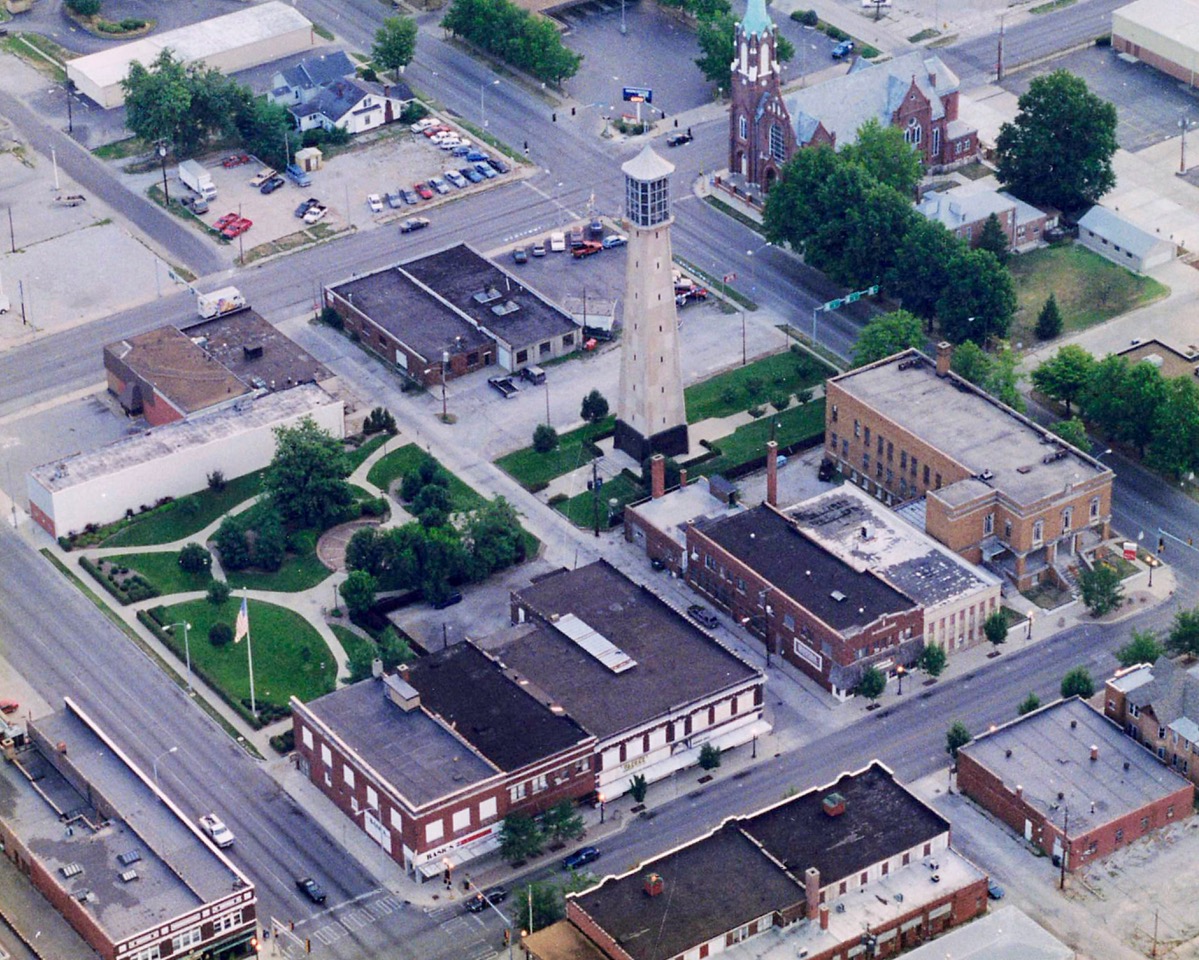
The original Carillon Park, developed alongside the tower in 1982–83.
Constructed in tandem with the tower between 1982 and 1983, the original Carillon Park was designed as an inviting downtown living room. This landscaped green space provides a comfortable, open setting where residents can gather to enjoy the carillon’s weekly recitals and summer concerts.
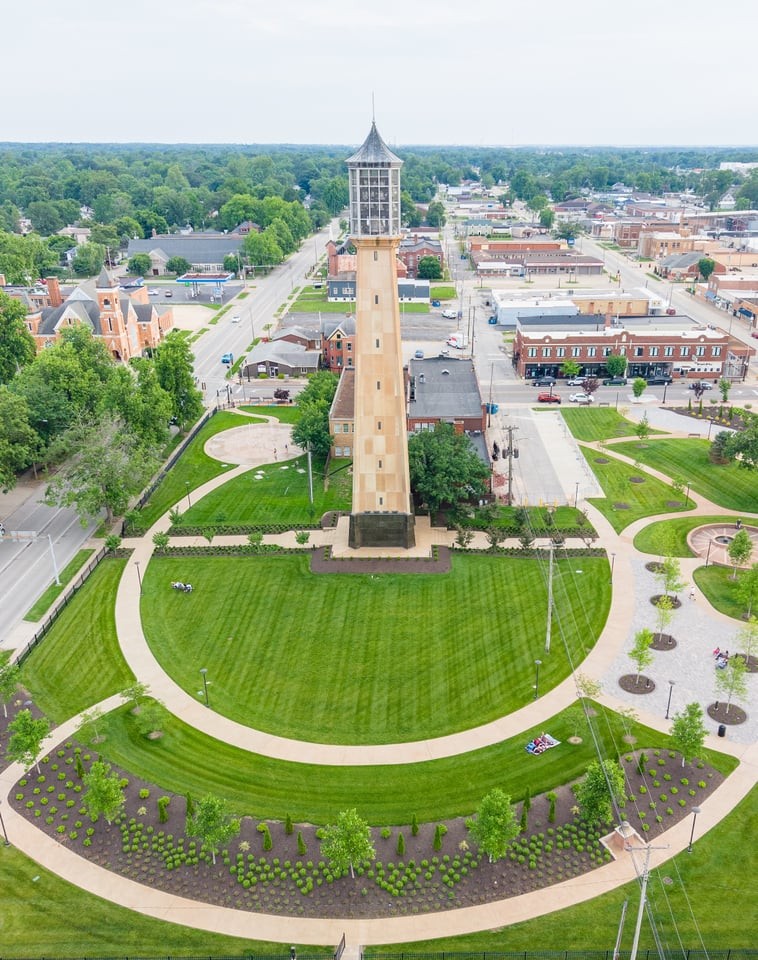
Concentric walkways inspired by sound waves, across the three acres added in the 21st-century expansion.
After acquiring adjacent properties, the Foundation launched a 3-acre expansion designed by Arbolope Studio in St. Louis, featuring striking concentric walkways inspired by sound waves. Through the collaborative efforts of landscape designer Jamie Nordike and Shores Builders, a further expansion of the park block now includes decorative plantings, additional trees, and gathering/meeting spaces for the community.
Slideshow
Installation of the Bells
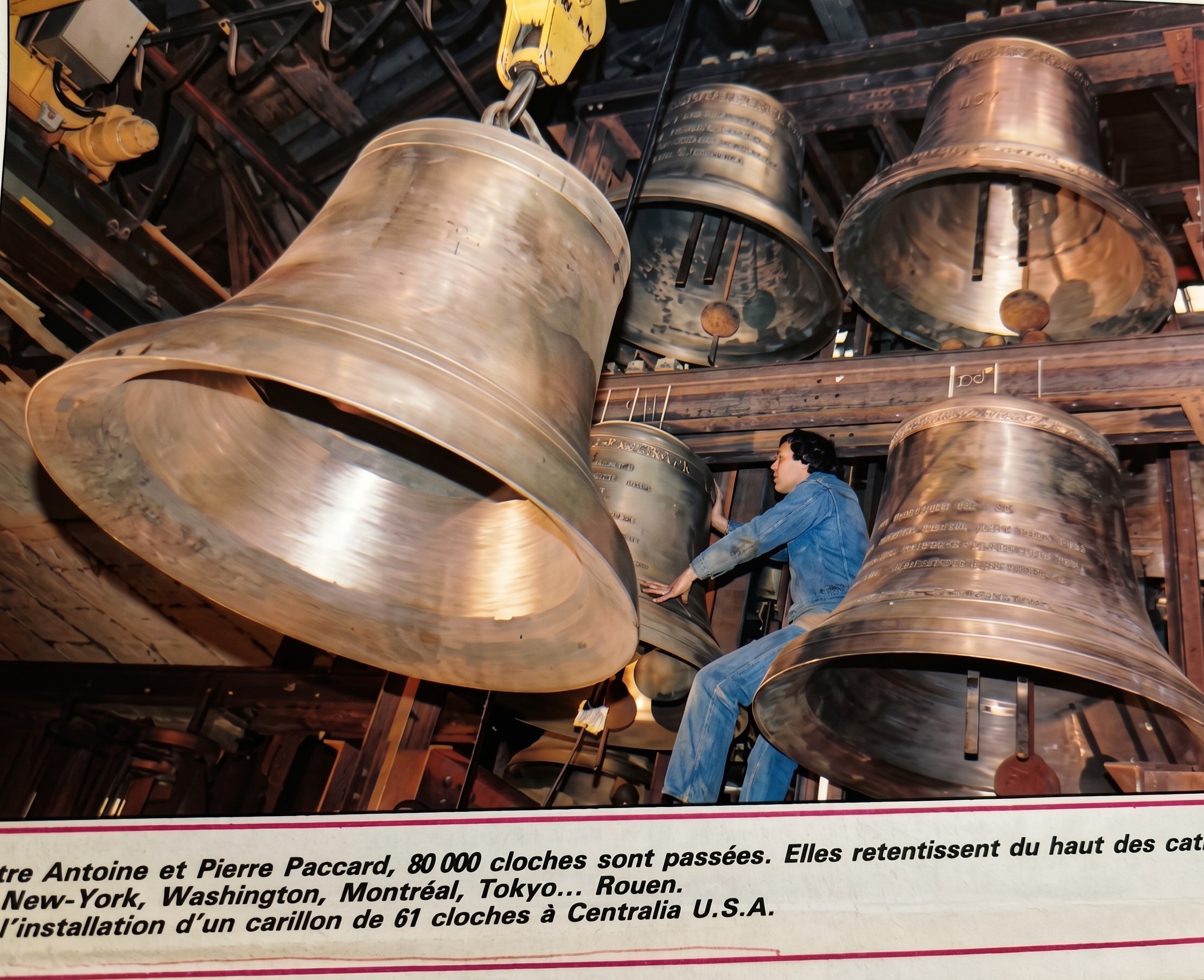
Arrival of the Shipment
The bells were cast at the Paccard Foundry in Annecy, France.
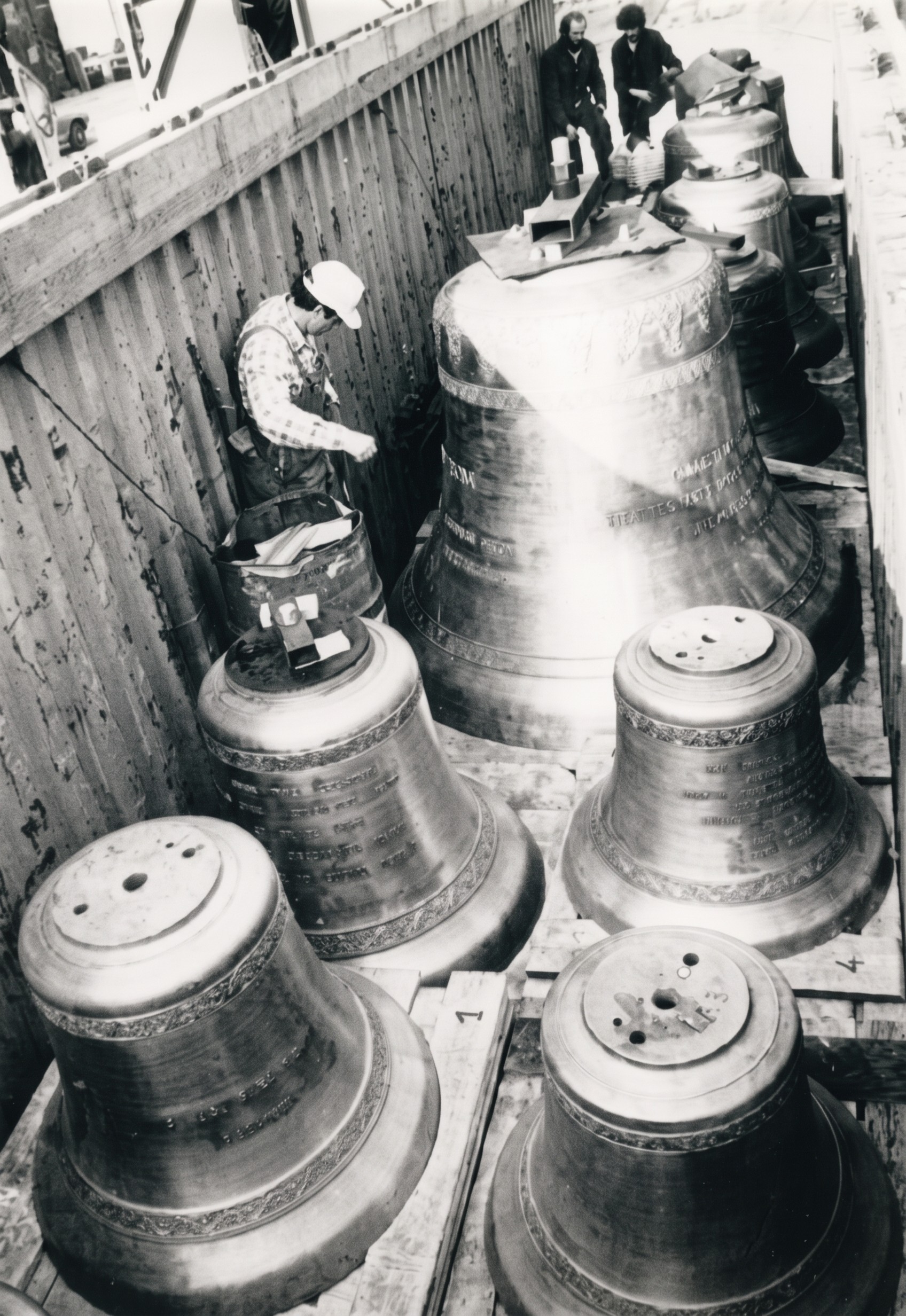
Unloading the Bells
The full shipment reaches Centralia, mid-February 1983.
Raising the Larger Bells
Great Tom is hoisted up
Raising the Larger Bells
Bells were lifted one by one to the top of the tower.
Raising the Larger Bells
The task of moving the massive bronze pieces up the structure proceeded one by one
Completing the Array
Hanging continued steadily until mid-March.
Completing the Array
The last bells hung in the open-air cage.
Hear Them
Free concerts all year beneath the tower